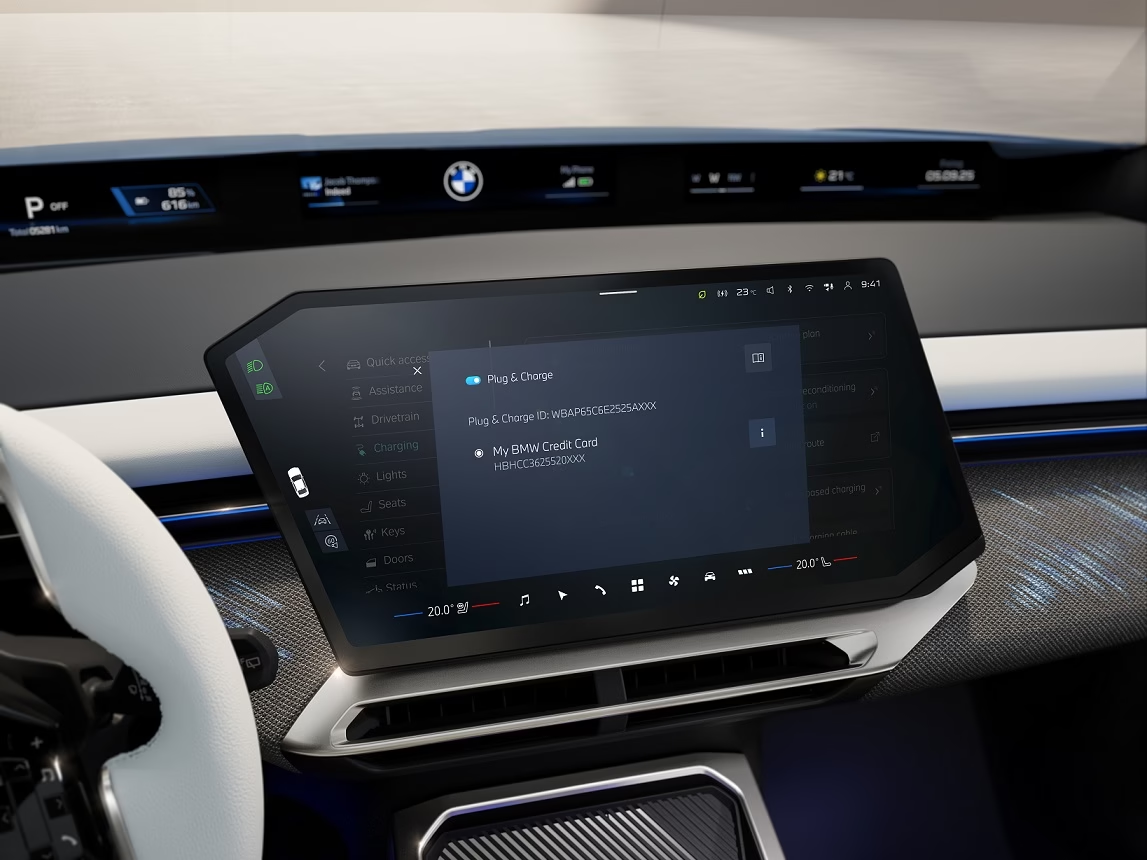

BMW is trying to make public charging as simple as filling up a petrol or diesel car. The new “Plug‑Charge‑Pay” setup lets drivers plug in, start charging and drive away without swiping any card or opening an app. Once enabled, the BMW or MINI itself becomes the payments device. It drawes from a credit card stored in the my BMW or MINI app. This removes extra steps at the charger and markedly reduces friction for everyday EV users.
How The Digital Wallet In The Car Works
Drivers first log into their BMW or MINI account inside the vehicle and link a credit card via the Plug & Charge menu in the my BMW or MINI app. At the selected charging station, the car then authenticates itself automatically when the cable is connected. The bill is calculated based on the operator’s current ad‑hoc rate and shown in real time both in‑car and in the app. Payment runs directly through the stored card, so the driver keeps full cost control while the backend handles everything else.
Simplifying Public Charging For All User Groups
Until now, smooth Plug‑Charge‑Pay often required a pre‑existing charging contract or a specific provider account. BMW’s new approach opens this level of convenience to customers who have never signed such contracts, including tourists and occasional drivers. Fleet‑ and company‑car users can also benefit, especially when they log into a different vehicle each day without managing separate cards or logins. This shift aligns with broader industry efforts to make charging more accessible across brands and use cases.
Roll‑Out With Mer And Hubject’s Ecosystem
The service launches in partnership with Mer Germany and Hubject’s Plug&Charge ecosystem across more than 1,400 charging points in Germany and Austria. These sites use Hubject’s interoperability platform to merge Plug&Charge authentication with direct credit‑card billing in one flow. BMW points out that this is the first time its Plug‑Charge‑Pay model extends to customers without a prior charging contract. More operators and markets are planned to join throughout 2026, spreading the same plug‑and‑pay logic across additional regions.
Transparency And Cost Control On The Go
Drivers can see the current charging price directly in the vehicle and in the my BMW or MINI app for supported stations. Billing is transparent, relying on the provider’s live ad‑hoc rate instead of a hidden markup or complex subscription layer. Since the system uses a standard credit card, customers can track charges in their usual bank statements and manage spending like any other digital payment. This transparency helps reduce one of the main pain points that many EV adopters mention about public charging today.
Aligning With Broader EV Charging Trends
Regulators in Europe now require ISO 15118‑based Plug‑Charge on many new public chargers, which BMW’s solution builds upon. At the same time, policy and market players are pushing contactless payment options to replace proprietary apps and cards. BMW ’s “car‑as‑credit‑card” payments model fits neatly into this trend, combining automated authentication with a familiar payment method. For owners and fleet operators, that means fewer accounts, fewer apps and a more consistent experience whether they drive occasionally or daily.