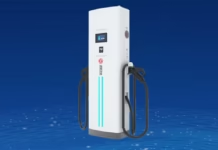
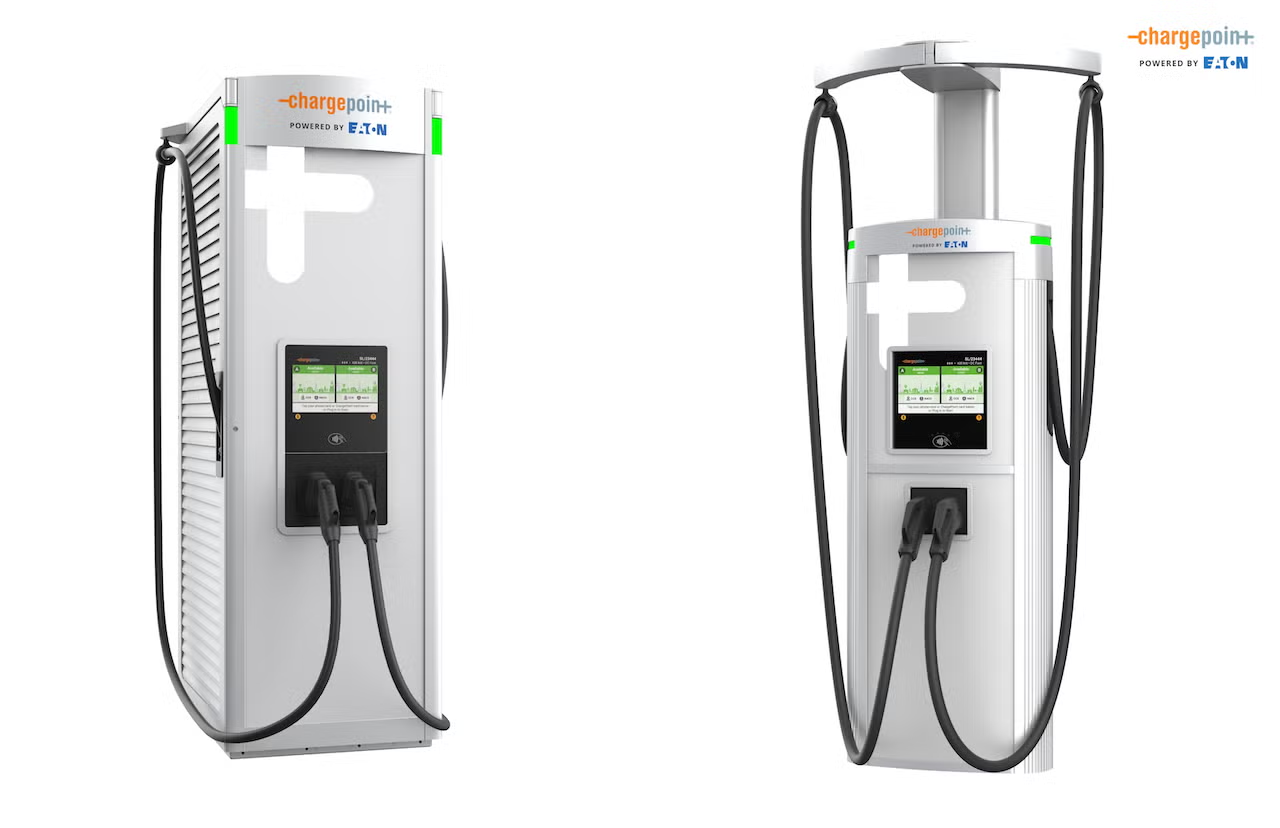

ChargePoint has launched the Express Solo, calling it the world’s fastest standalone EV charger for mass‑market vehicles. It targets everyday passenger cars and aims to shrink charging stops to a couple of minutes. The unit can deliver up to 600 kW to a single EV or share that power across up to four vehicles.
This new product is the first commercial unit built on ChargePoint’s next‑generation Express DC fast‑charging platform. It pushes the speed of public charging much closer to a gas‑station experience. That shift helps reduce “range anxiety” among mainstream EV drivers.
Compact, scalable hardware
Express Solo packs extreme power into a compact physical footprint. The small size makes it easier to place in parking lots, retail centers, and transit hubs. Operators can install more stalls without needing extra land or complex construction.
Each unit offers configurable power levels, including 200 kW, 400 kW, and 600 kW. These settings can run as single‑port kiosks or as paired units that share the total available power. That modularity lets operators match hardware to local grid limits and traffic patterns.
The system also supports dynamic power sharing across multiple vehicles. When only one car is charging, the kiosk can deliver its full rated power. When more EVs plug in, the software smoothly redistributes the load to keep speeds high for everyone.
Multi‑region use and connector options
The Express Solo is the first ChargePoint DC fast charger engineered for both North America and Europe. In North America it will ship with NACS (SAE J3400) connectors, while European versions use CCS2. This design lets operators standardize hardware across large geographic areas.
Thanks to the ChargePoint Omni Port system, one physical unit can serve vehicles with different inlets. Fleet and public operators do not need to buy separate chargers for each brand. This flexibility reduces stranded assets if one standard becomes dominant in a region.
The charger supports the latest high‑performance EVs from brands such as Tesla, Ford, GM, Hyundai, and Kia. New models with 800‑volt architectures and advanced battery‑cooling systems can take full advantage of the 600 kW level. That compatibility helps future‑proof stations as the EV market evolves.
Core technical features
- Up to 600 kW peak power per device, with paired setups reaching 750 kW.
- Configurable power sharing across one to four EVs at the same kiosk.
- Three‑phase input at 480Y/600Y VAC, 50–60 Hz, suitable for commercial‑scale sites.
- Hardware‑ready for bidirectional charging (V2G) and battery‑storage integration.
- High‑power cables rated up to 800 A and 1,000 A in boost mode.
These specs put Express Solo at the top of today’s DC fast‑charging landscape. Under ideal conditions, it can add more than 100 km of range in under three minutes. That speed is comparable to the latest ultrafast units from other global manufacturers.
The system also includes advanced thermal and load‑management features. These help protect the grid, the transformer, and the vehicle’s battery during high‑power sessions. Over time, that protection can extend the life of both infrastructure and fleets.
Cloud, energy‑management, and grid services
ChargePoint co‑developed the Express architecture with Eaton to embed energy‑management capabilities. The platform can support bidirectional power flow and integrate with battery‑storage systems. This setup allows stations to store low‑cost energy and discharge it during peak‑tariff periods.
The charger links to ChargePoint’s cloud platform and energy‑management tools. Operators can schedule charging around peak‑tariff windows or local grid constraints. Some sites can even use these tools to reduce demand charges and participate in grid‑balancing programs.
For fleets and parking providers, this integration turns chargers into active energy assets. Instead of simple “fuel pumps,” they can help stabilize the grid and cut electricity costs. In dense urban areas especially, that flexibility will become more valuable as EV loads grow.
Market position and global charging race
China currently leads in the rollout of ultrafast and megawatt‑scale chargers. However, North American and European markets are beginning to catch up. ChargePoint positions Express Solo as a high‑power solution for everyday passenger vehicles, not only for heavy‑duty fleets.
Competitors such as ABB and others have also released powerful chargers aimed at highway and urban hubs. ChargePoint differentiates itself by combining strong hardware with a mature software stack and a broad network. That mix may make Express Solo attractive for retail, highway, and fleet operators alike.
The product also fits into ChargePoint’s broader strategy of expanding into Europe while strengthening its U.S. base. The company plans to roll out high‑speed kiosks in more cities and service plazas over the coming years. This expansion will help standardize fast‑charging experiences across many regions.
Impact on EV adoption and user experience
Fast charging remains one of the biggest psychological barriers for many potential EV buyers. Express Solo’s 600 kW level makes 10–15 minute stops realistic for many current EVs. Drivers can add hundreds of kilometers of range while taking a short coffee break.
For long‑distance travelers, this speed reduces the gap between ICE and EV road‑trip experiences. Instead of waiting 30–40 minutes, many drivers can recharge in a time that feels more like a gas‑station stop. That shift can encourage more consumers to choose EVs for both daily and occasional use.
From an infrastructure view, high‑power kiosks also help operators right‑size stations. Fewer, denser stalls can serve the same number of vehicles while using less grid capacity. As cities and highways upgrade their charging networks, tools like Express Solo will shape how and where EVs refuel quickly.
Business and sustainability benefits
From a business perspective, faster charging can increase station utilization and revenue. Operators can serve more vehicles per hour without expanding their physical footprint. That higher throughput can improve the economic case for new charging sites.
For cities and utilities, high‑power stations with smart energy management can support grid‑friendly EV growth. These systems can avoid sudden spikes in demand and reduce the need for costly upgrades. In time, they can also help integrate more renewable energy onto the grid.
Overall, the Express Solo sits at the intersection of speed, software, and sustainability. It pushes the limits of what a single‑kiosk charger can deliver while aligning with broader energy and EV‑adoption goals.