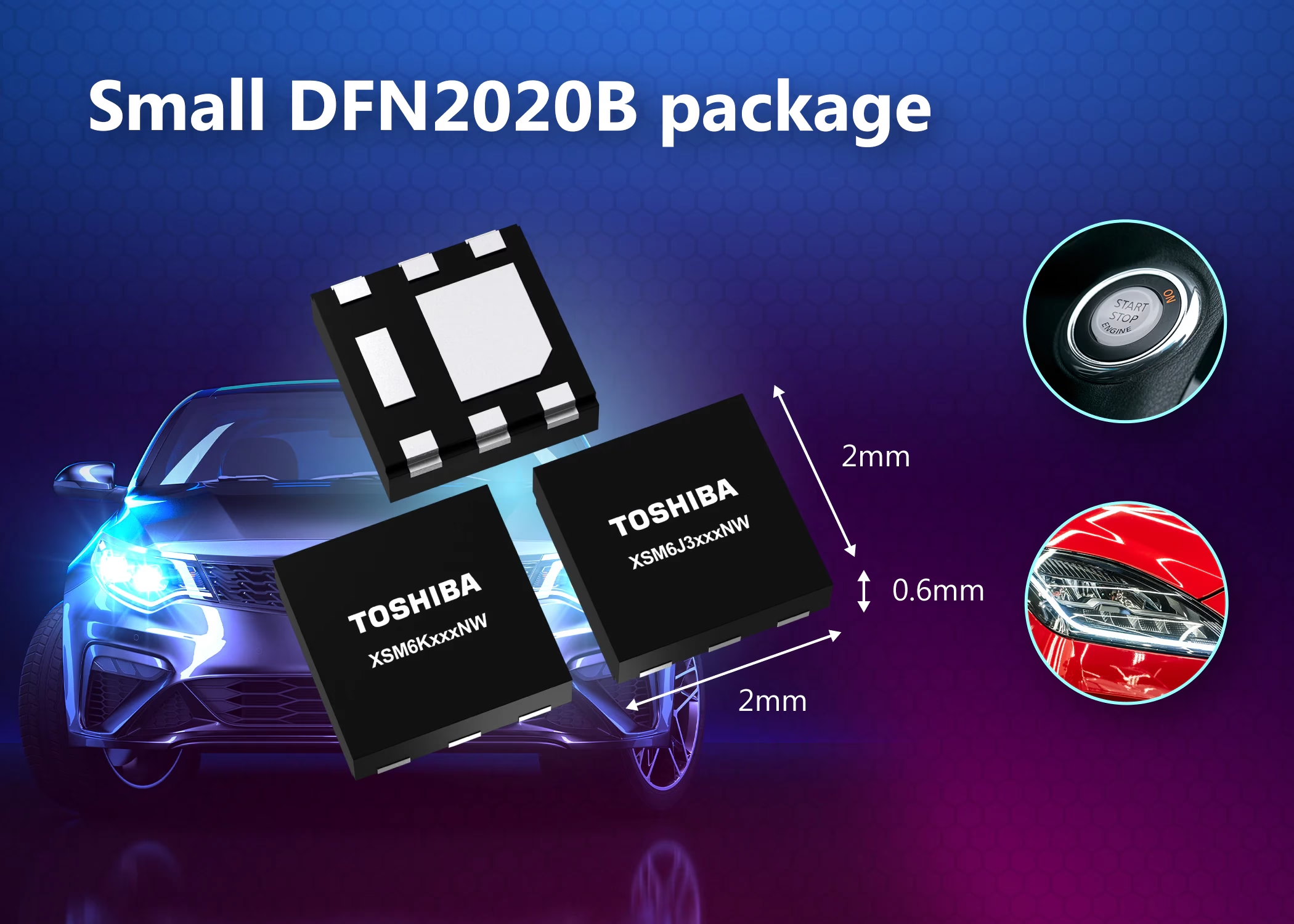

Toshiba Electronics Europe has launched five new automotive grade MOSFETs inside a compact DFN2020B(WF) package with wettable flanks. These devices include four N‑channel MOSFETs—XSM6K361NW, XSM6K519NW, XSM6K376NW, and XSM6K336NW—and one P‑channel MOSFET, XSM6J372NW. The DFN2020B(WF) replaces larger SOT‑23F and UDFN6B packages while improving both size and reliability. This shift supports the growing density of semiconductors in modern vehicles, especially in EVs and advanced driver‑assistance systems (ADAS).
Wettable flank structure and AOI‑friendly solder joints
The wettable flank structure on the DFN2020B(WF) improves solder wettability compared with Toshiba’s earlier UDFN6B package. It also produces a more visible solder fillet along the side of the component, which AOI systems can inspect much more easily. This visibility helps manufacturers automate visual inspection and reduce reliance on slower methods such as X‑ray. In shear‑strength tests, the new package shows about 23% higher solder‑joint strength than the SOT‑23F, making it suitable for harsh automotive environments.
Miniaturization benefits for ECUs and lighting systems
The DFN2020B(WF) package measures roughly 2.0 mm × 2.0 mm × 0.6 mm, making it significantly smaller than the 2.4 mm × 2.9 mm × 0.8 mm SOT‑23F. This design reduces the PCB mounting area by around 43% and lowers the package height by about 25%. These savings are critical for compact engine‑control units, infotainment modules, and power‑train electronics in modern vehicles. They also help designers integrate more functions into the same board footprint without increasing overall module size.
High power dissipation in a small footprint
Despite the tiny size, the new MOSFETs maintain high power‑handling capability, which is essential for automotive loads. For example, the XSM6K361NW delivers a maximum power dissipation of 1.84 W, roughly 1.5 times higher than Toshiba’s SSM3K361R in an SOT‑23F package. This performance supports compact DC‑DC converters that power ECUs and safety‑related systems in EVs. It also benefits LED headlamp and interior‑lighting load switches, where designers must balance efficiency, heat, and board space.
AEC‑Q101 and PPAP for automotive production readiness
The new MOSFETs comply with AEC‑Q101, the standard reliability‑test qualification for automotive semiconductors. This certification covers temperature cycling, humidity, and mechanical stress tests, ensuring stable operation across a wide range of driving conditions. They are also supported by PPAP documentation aligned with IATF16949, the quality‑management standard for automotive suppliers. Together, these qualifications simplify integration into high‑volume automotive production and help OEMs meet strict quality and safety targets.
Future roadmap and impact on automotive electronics
Toshiba plans to expand its MOSFET lineup using the DFN2020B(WF) package, including future 2‑in‑1 MOSFET products for automotive applications. “2‑in‑1” configurations can combine high‑side and low‑side switches in a single package, reducing component count and layout complexity. This roadmap aligns with industry trends toward highly integrated, miniaturized power stages for EV power electronics and ADAS cameras. As a result, DFN2020B(WF)‑based MOSFETs are likely to play a key role in the next generation of compact, reliable automotive power systems.