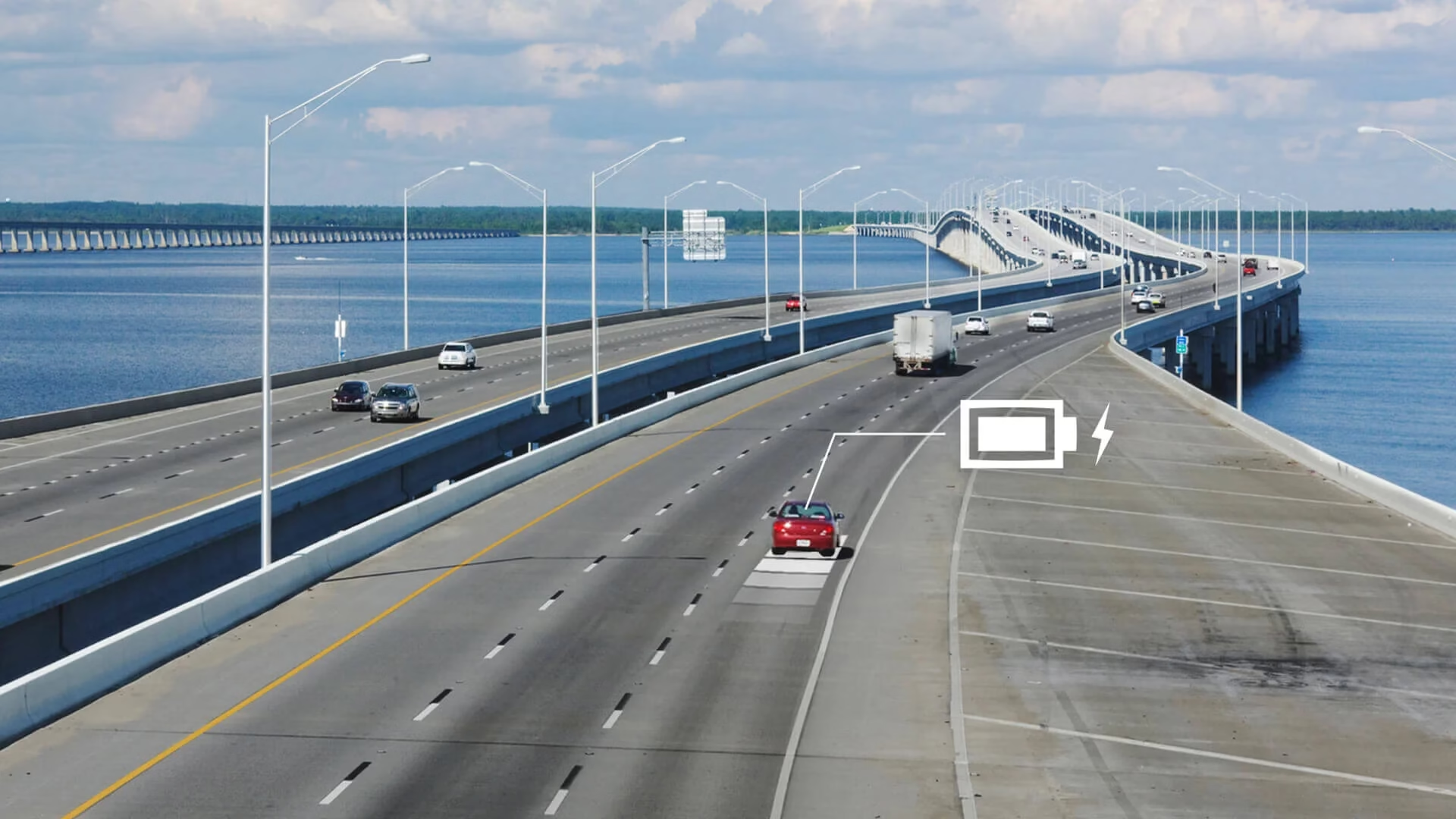

Denso is advancing a system that sends electricity wirelessly to moving electric vehicles from coils embedded in the road. This so‑called dynamic wireless power transfer targets completion by fiscal 2029. The approach could change how drivers think about charging and range.
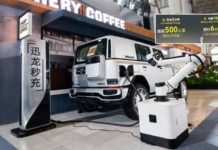
Transmitting power from road coils to receiving coils on the underside of vehicles happens in real time. Drivers would not need to stop coasting to keep the battery topped up. In a test in Aichi Prefecture, Denso achieved 500 kilometers of continuous driving over 50 hours.
Denso’s technology and test results
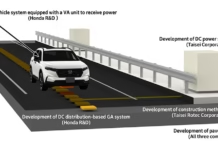
Denso’s in‑motion system uses magnetic induction, similar to smartphone wireless pads but scaled for highways. Power flows from road‑embedded coils to pickup coils mounted under the EV. The link operates at high efficiency while the car cruises at normal speeds.
During the 2024 test on company grounds, engineers kept a prototype EV circulating for 50 hours. The vehicle covered 500 kilometers with no conventional stops. Energy loss, heat generation, and alignment stability all met the target benchmarks.
Independent analyses of in‑motion wireless charging indicate that efficiency can reach roughly 85–90% when coils are well tuned. Denso’s design aligns with those figures and focuses on safety gaps and electromagnetic‑field shielding. Such refinements help avoid interference with nearby electronics.
How smaller batteries enable new designs
Running EVs on smaller batteries reduces mass, which lowers tire wear and road‑surface stress. Lighter vehicles also improve efficiency and extend tire life. Denso argues that this combination can cut both operating cost and infrastructure damage.
Smaller packs take up less cabin and cargo space, freeing room for passengers or cargo. Packers of OEMs are exploring layouts where battery modules sit lower or more compactly. This shift can improve center‑of‑gravity and ride comfort.
Several automakers are already trimming battery‑capacity targets while keeping range constant. Toyota, for example, has spoken of pairing lower‑capacity batteries with fast‑charging and route‑optimized charging stops. Denso’s moving‑charge system fits neatly into that strategy.
Integration with Toyota and Japanese mobility
Denso, as a Toyota‑affiliated supplier, is likely to prioritize Toyota and Lexus platforms first. Toyota has long invested in hybrid and electrified powertrains. Adding in‑motion wireless charging would extend that lead into smart‑infrastructure space.
Toyota also supports several dynamic‑charging projects in Japan, including test tracks and pilot bus lines. Denso’s coils could plug into those ecosystems without redesigning the whole vehicle. The synergy between parts maker and OEM shortens the path to commercialization.
Beyond Toyota, Denso is working with the University of Tokyo on a 10‑year research deal. The partnership focuses on coil efficiency, system durability, and grid‑side integration. Such academic–industry ties help tackle complex engineering problems more quickly.
Infrastructure challenges and rollout plans
Installing power‑transmitting coils along public roads raises cost and coordination issues. Contractors must embed the coils, link them to power supplies, and ensure pavement durability. Municipalities also need to allocate budget and plan for disruptions.
Denso acknowledges that upfront infrastructure outlay is a major hurdle. The company plans to map traffic‑flow patterns and prioritize high‑use corridors first. Highways, urban bus routes, and logistics hubs are likely early deployment zones.
Globally, a few test tracks already demonstrate in‑motion wireless charging. For example, Italy’s Arena del Futuro oval uses induction coils to feed EVs while they circle. These projects help collect data on coil spacing, power delivery, and grid load that Denso can reuse.
Benefits for consumers and the EV market
Many buyers still hesitate over EVs because of range worry and charging time. Dynamic wireless charging removes the need for long stops at fast‑chargers. Drivers can keep moving while the battery replenishes slowly.
Range‑anxiety studies show that drivers feel more comfortable when they can add energy frequently. Small, continuous top‑ups mimic the refueling pattern of conventional cars. This shift can increase EV adoption, especially among fleet users.
For fleets, Denso’s system offers another advantage: lower downtime. Delivery trucks and buses can stay on the road longer without scheduled charging windows. Over time, fewer chargers and less depot space may be needed.
Safety, standards, and environmental impact
Safety standards for dynamic wireless charging are still evolving. International bodies and carmakers are working on exposure limits for electromagnetic fields. Denso must show that its system meets or exceeds those limits.
Shielding and control systems keep stray fields away from pedestrians and nearby vehicles. The design also prevents overheating and component failure under heavy use. Fail‑safe logic can cut power if a foreign object aligns with the coil.
From an environmental angle, lighter vehicles and smoother charging help limit resource use. Smaller batteries need less lithium, cobalt, and nickel. The system also reduces the need for frequent high‑power charging cycles, which strain local grids.
Denso’s broader electrification strategy
Wireless charging is only one part of Denso’s electrification portfolio. The supplier also develops motor inverters, battery‑management systems, and thermal‑management units. Together, these technologies increase EV efficiency and reliability.
Denso’s “Driven Base” project includes several initiatives to make EVs more convenient. Among them is in‑motion charging, but the portfolio also covers stationary wireless pads and smart‑parking‑spot chargers. The goal is to remove friction at every stage of ownership.
Moving forward, Denso will likely test mixed‑mode operation. Vehicles could draw wireless power while driving and also top‑up at parked‑wireless stations. This hybrid approach balances infrastructure cost with user convenience.
Key deployment steps toward 2029
Denso’s roadmap breaks the 2029 target into clear stages. First, it continues refining coil efficiency and system integration. Next, the company will run open‑road pilots on selected routes.
These pilots will help measure energy loss, grid impact, and user satisfaction. Feedback will shape final design choices before large‑scale rollout. Denso may also partner with toll‑road operators and transit agencies.
By fiscal 2029, Denso wants the system to be ready for commercial installation. Early adopters will likely be urban‑transit lines and regional highways. Consumer cars could follow once the network density justifies the investment.
Why Denso’s moving‑EV charger matters
- Reduces charging stops and range anxiety for drivers.
- Enables smaller, lighter batteries and lower vehicle mass.
- Lowers road wear and tire‑replacement frequency.
- Fits into Toyota’s broader electrification and hybrid strategy.
- Builds on existing test tracks and global dynamic‑charging projects.
- Helps fleets minimize downtime and depot‑space needs.
- Supports sustainability goals by cutting battery‑material demand.