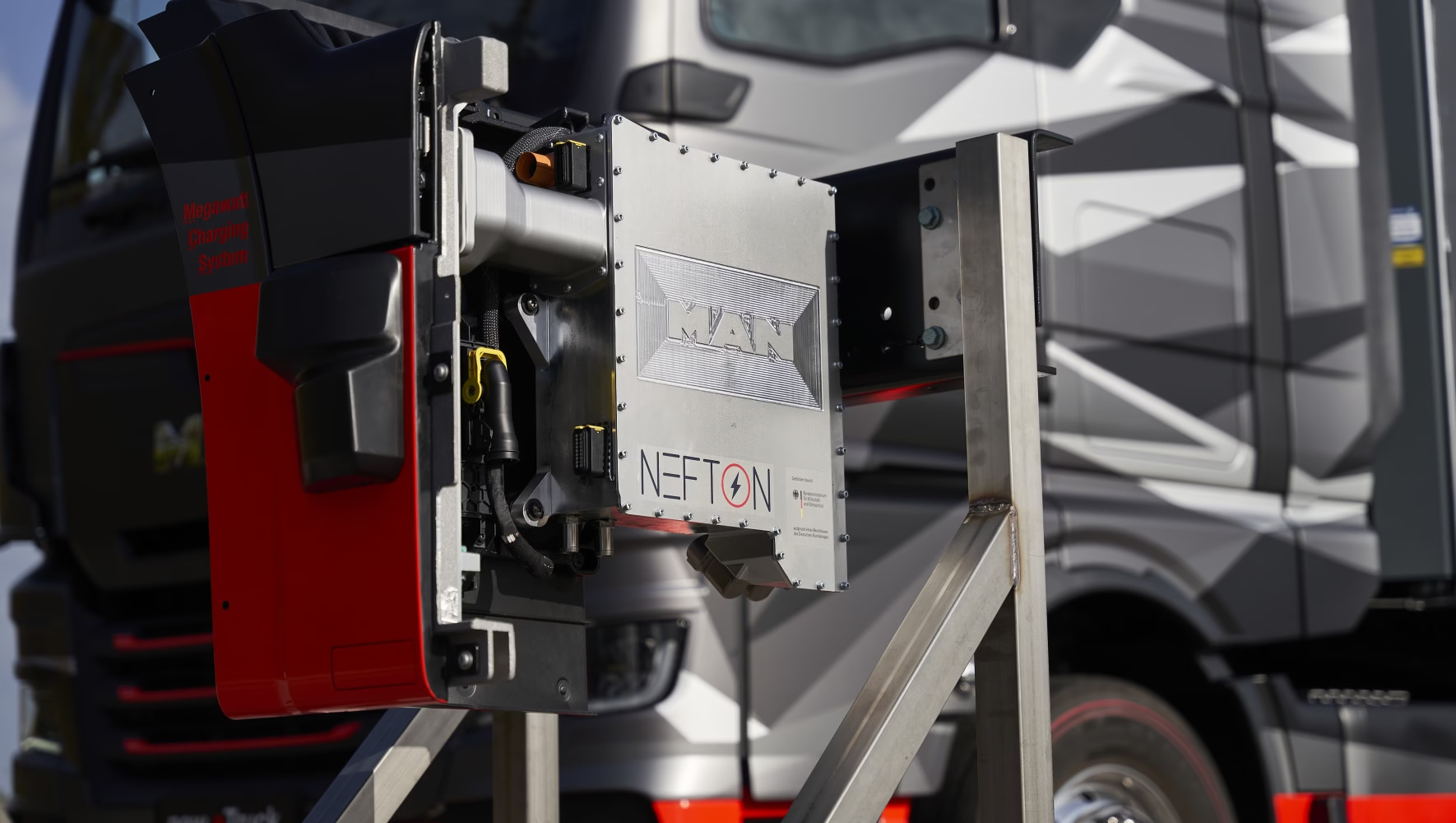

MAN Truck & Bus says it has successfully operated a vehicle charging path at 3,000 amperes in the NEFTON project. The result marks a key step toward megawatt charging for battery-electric trucks.
The company says the test bench work points toward charging capacities of up to three megawatts. That level could shorten charging stops for eTrucks in real operating conditions.
Faster charging
The core issue is simple: electric trucks need far more energy than passenger cars. Fraunhofer ISE notes that the Megawatt Charging Standard targets 1,250 volts and 3,000 amps for this power class.
That matters because freight operators need charging that fits duty cycles, not just lab conditions. Faster charging can support route planning, legal driving breaks, and mixed-use depot operations.
What the tests showed
The project teams tested the charging path on benches at the Technical University of Munich and Fraunhofer ISE. Those tests examined thermal behavior, switching parts, cooling, and safety architecture under demanding electrical loads.
MAN says the system stayed stable at 3,000 amperes. Fraunhofer ISE adds that the setup also helped validate grid connection requirements and high-current component performance.
Technical design work
The project did not rely on one component alone. MAN says the team redesigned the current path to reduce resistance, since high current creates major heat losses.
Cooling also played a central role. The partners used liquid cooling for cables, connectors, and distribution units, while contactors and shutdown devices were built for high switching capacity and safety.
Project consortium
NEFTON brought together MAN Truck & Bus, AVL, the Technical University of Munich, Fraunhofer ISE, Prettl Electronics Automotive, the Research Center for Energy Economics, and Deggendorf Institute of Technology.
The project received support from the German Federal Ministry for Economic Affairs and Climate Action through the DLR project management agency. MAN says the TRATON Group will continue the work after the project ends.
List of key points
- The test bench reached 3,000 amperes for the first time.
- The target power class is up to three megawatts.
- The system was tested at TUM and Fraunhofer ISE.
- Cooling, switching, and safety components were redesigned.
- Future charging could support about 400 km in 10 to 15 minutes.
- The results will feed into near-production charging development.
Charging time Outlook
MAN says the long-term goal is enough energy for roughly 400 kilometers in 10 to 15 minutes. That would make electric trucks much easier to use on demanding routes.
The company also says very fast intermediate charging could support smaller batteries in the future. That could reduce weight, while still keeping vehicles operational through the day.
Infrastructure challenge
Fraunhofer ISE stresses that charging stations in this range need more than high-power electronics. They also need suitable grid connections, protection systems, and test infrastructure capable of handling extreme loads.
The institute frames these charging sites as hybrid power plants when combined with storage and solar generation. It says that this setup can help operators electrify fleets before the broader grid is fully expanded.
Sources: MAN