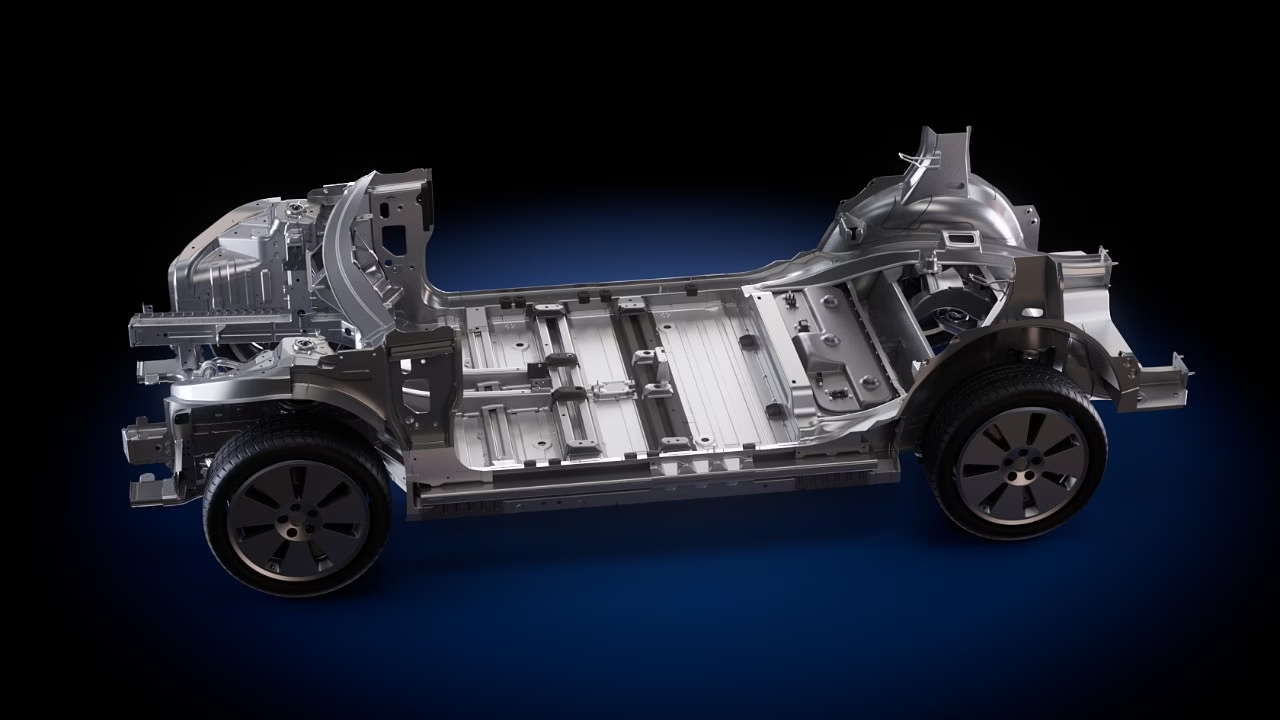

GM has outlined its fourth-generation EV platform as a system-level redesign rather than a single component upgrade. The company says the platform will combine lithium manganese rich batteries, compact propulsion, centralized computing, and updated Super Cruise in high-volume vehicle segments.
The announcement positions the platform as GM’s route to mainstream electric mobility. It targets the market’s largest segments, where purchase price, driving range, durability, and usable space often decide buying decisions.
A New Way to Develop Vehicles
GM describes its previous development process as a relay race. One engineering group completed its work and passed the vehicle program to the next team.
The fourth-generation platform instead uses concurrent development. Designers, engineers, and manufacturing specialists work together earlier, allowing them to test more ideas before committing to a final design.
GM calls this approach a “better-faster” cycle. Instead of evaluating a limited number of vehicle paths, teams can examine hundreds of thousands of possible configurations.
The company says every component, gram, and material choice must justify its place in the vehicle. This discipline links mass reduction, aerodynamics, battery cost, motor size, and structural strength into one development process.
GM expects this method to halve the traditional five-year vehicle development timeline. That would bring a new platform to production in roughly half the time associated with conventional automotive programs.
The approach also changes how engineering trade-offs are made. A lighter structure can allow a smaller battery, while improved aerodynamics can reduce the energy needed at highway speed.
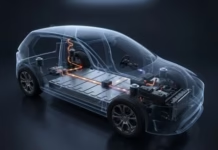
GM says early work indicates that LMR prismatic batteries, new electric drive units, and aerodynamic improvements will deliver about 20% more range per kilowatt-hour than current vehicles. The gain therefore reflects the complete vehicle system, not battery chemistry alone.
LMR Batteries Anchor the Platform
The central hardware change is GM’s lithium manganese rich, or LMR, battery chemistry. GM plans to use LMR prismatic cells in its highest-volume EV segments, especially where range, durability, and affordability carry the greatest weight.
Ultium Cells, GM’s battery joint venture with LG Energy Solution, will produce the cells in Spring Hill, Tennessee. GM describes the planned product as the world’s first production LMR battery.
LMR is designed to provide 33% higher energy density than lithium iron phosphate, or LFP. GM also expects it to reach a cost level comparable with LFP, a chemistry widely used for lower-cost EVs.
In practical terms, higher energy density allows a smaller and lighter pack to deliver a given driving range. Alternatively, engineers can retain a larger pack and pursue longer range without adding proportional cost.
GM’s earlier announcement with LG Energy Solution provides more technical context. LMR cathodes use a much higher share of manganese and a lower share of nickel than high-nickel cells, while containing virtually no cobalt.
Manganese is more abundant and less expensive than nickel or cobalt. GM says this material strategy can reduce cell cost while supporting higher capacity and energy density.
The company has also addressed LMR’s historical weaknesses. Earlier manganese-rich designs faced durability and voltage-decay problems, which limited their commercial use.
GM says it began researching manganese-rich lithium-ion cells in 2015 and accelerated the work in 2020. By the end of 2024, it had coated about one ton of LMR cathode and tested hundreds of large-format prismatic cells.
Those tests covered 18 prototype variants and three cell dimensions. GM says the equivalent test exposure reached 1.4 million miles of EV driving.
Virtual Testing Compresses Battery Development
Battery development normally requires extensive physical experimentation. GM says traditional programs can involve hundreds or thousands of built cell designs and take years to complete.
For LMR, GM used computer modeling to evaluate more than 300,000 battery designs before building one physical prototype. This virtual-first process allowed the company to narrow its options before committing to costly hardware.
The result was an unusually fast program milestone. GM says the team moved from its first LMR battery-pack concept to formal program approval in one month.
The company’s separate GM Forward announcement repeats this claim. It frames virtual testing as a key enabler of both faster development and a better range-to-cost ratio.
The virtual process does not remove physical validation. GM still plans to validate the final production design at its Battery Cell Development Center in Warren, Michigan, and at LG Energy Solution facilities.
However, it changes where most early exploration occurs. Computational models can reject weak concepts before engineers build cells, assemble packs, or install production equipment.
Propulsion Becomes Smaller and Simpler
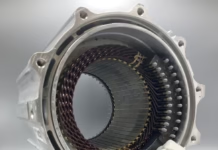
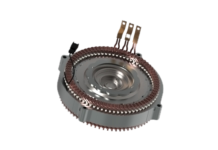
GM is also redesigning the components that turn battery energy into motion. Its new family of electric motors and power electronics reduces the number of parts inside each drive unit by 40%.
Fewer components can reduce mass, assembly complexity, and production cost. GM says the smaller propulsion system also creates more room for passengers and cargo.
This matters especially for trucks and full-size SUVs. Those vehicles need substantial battery capacity, robust drive units, and enough interior and load space to remain competitive with combustion models.
GM’s LMR plans are closely tied to these vehicle types. The company has said it aims to offer more than 400 miles of range in an electric truck while achieving meaningful battery-pack cost savings compared with today’s high-nickel packs.
The propulsion redesign therefore supports two goals at once. It improves packaging efficiency inside the vehicle and helps make electric trucks and SUVs more affordable to build.
Centralized Computing Replaces Distributed Wiring
The fourth-generation platform also introduces a new compute and electrical architecture. GM says it uses fewer control modules and 30% less wiring than today’s EVs.
The architecture provides 40 times more processing power for AI-enabled features. That increase is intended to support software updates, energy management, displays, voice controls, and driver-assistance functions.
Centralized computing can simplify the vehicle’s electronic foundation. Fewer modules and wiring harnesses may reduce cost, mass, and potential points of failure.
GM links this architecture to the full vehicle life cycle. It expects the platform to provide a simpler base for future software releases and continued improvement of Super Cruise and OnStar.
Super Cruise is GM’s hands-free driver-assistance technology. GM says customers have driven 1.2 billion miles using the system, providing safety and operational insights for future development.
The updated platform is therefore not only a hardware program. It is also intended to make software-driven features easier to improve after vehicles reach customers.
Manufacturing Uses Digital Models and Plant Data
GM extends the “better-faster” philosophy into production. Digital models will let manufacturing teams test assembly steps, equipment placement, safety risks, and ergonomic issues before hardware is installed.
Once production begins, GM’s PlantBrAIn factory-intelligence platform will combine plant-floor data with computer models. The goal is to identify improvements in how fourth-generation EVs and battery packs are built.
GM says the approach is already producing results. At its battery-pack assembly facilities, the method has helped move battery packs through the process 30% faster.
Similar digital tools are used across stamping, casting, welding, painting, and final assembly. This suggests the platform’s efficiency gains are intended to reach the entire manufacturing chain, not only battery production.
The vehicles will also participate in quality control. Using the new compute and electrical architecture, each vehicle can test electrical connections while moving down the assembly line.
GM says this capability removes the final validation check after the vehicle is built. In effect, the car verifies parts of its own electrical integrity during production.
Key Platform Changes
- LMR prismatic batteries: GM plans 33% higher energy density than LFP at comparable cost.
- System-level efficiency: Battery, drive-unit, and aerodynamic work targets about 20% more range per kilowatt-hour.
- Faster development: GM expects concurrent engineering to halve the traditional five-year development timeline.
- Virtual battery design: More than 300,000 LMR designs were tested digitally before the first physical prototype.
- Simplified propulsion: New motors and power electronics cut drive-unit parts by 40%.
- Reduced wiring: The new electrical architecture uses 30% less wiring than current GM EVs.
- Greater computing capacity: The platform provides 40 times more processing power for AI-enabled functions.
- Digital manufacturing: PlantBrAIn combines factory data and models to improve production performance.
- In-line electrical checks: Vehicles can test electrical connections during assembly, removing a final validation step.
What the Platform Means for GM
The fourth-generation platform is designed to address the central challenge of mass-market EVs: delivering long range without making vehicles too expensive. GM’s answer combines lower-cost battery materials, higher energy density, simpler hardware, and more efficient production.
LMR is particularly important to that strategy. GM positions it between LFP, which emphasizes affordability and durability, and high-nickel chemistry, which emphasizes maximum range and performance.
The company says high-nickel batteries will continue to serve customers seeking the greatest range. LMR is intended to improve on lower-cost chemistries while supporting GM’s scale and profitability goals.
Production timing remains central. Ultium Cells has said construction and facility upgrades at Spring Hill will begin later in 2026 and should be completed in 2028.
GM has previously stated that commercial LMR cell production in the United States is planned for 2028. Pre-production is expected at an LG Energy Solution facility by late 2027.
The fourth-generation EV platform therefore connects several GM initiatives into one commercial strategy. It links battery chemistry, vehicle engineering, software architecture, and factory digitalization around a common objective: making capable electric vehicles easier to build and more affordable to buy.
Sources: GM