
Nexeon announced Honda Motor Co. Ltd. as a new strategic investor on May 28, 2026. This investment comes through Honda’s global open innovation program called Honda Xcelerator Ventures. The funding supports Nexeon ‘s growth and advancement of silicon anode materials for electric mobility applications. Honda’s investment reflects strong confidence in Nexeon’s technology and its potential role in high-performance energy storage solutions. This technology represents a cornerstone of next-generation energy storage systems.
Silicon Anode Technology Delivers Superior Energy Density
Silicon possesses ten times higher specific capacity than conventional graphite anode materials. The theoretical capacity of silicon reaches approximately 3,579 mAh/g compared to graphite’s 372 mAh/g. This means silicon can hold significantly more lithium ions in a given mass. Higher-capacity anodes like silicon-enhanced materials increase battery energy density by 20-40%. Nexeon’s flagship materials NSP1™ and NSP2™ have overcome traditional silicon expansion problems.
Overcoming Silicon Expansion Challenges
Conventional silicon expands under charge and breaks the electrode structure. This expansion causes rapid cell capacity fade and overall battery degradation. Nexeon’s proprietary anode structure contains expansion characteristics effectively. The technology achieves greater capacity than graphite while retaining good cell cycle life. NSP1™ replaces up to 10 wt% of graphite in traditional anodes as a drop-in solution. NSP2™ unlocks full specific capacity benefits and allows greater graphite replacement.
Production Scale-Up and Global Manufacturing Capability
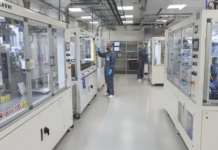
Nexeon successfully commissioned its first global volume production facility for silicon-carbon battery materials. This facility represents the first of its kind worldwide for silicon-carbon battery materials production. The company can now supply critical battery materials at scale to leading cell manufacturers. Nexeon secures key precursor supply through an efficient partner pipeline. The production facility enables integration into existing production operations easily.
Global Patent Portfolio and Market Position
Nexeon holds over 290 patents backing its silicon based anode technology. The global patent portfolio covers major territories including the US, Europe, and China. Additional patent coverage extends to South Korea and Japan markets. The company maintains an extensive portfolio of industry-leading cell manufacturing partners. Nexeon also works with automotive OEMs across multiple markets.
Strategic Benefits for Honda’s Electrification Goals
Honda aims to achieve 100% carbon neutrality by 2050 across all products. The company targets electric or fuel cell models for 100% of global vehicle sales by 2040. Honda plans to introduce EVs with all-solid-state batteries in the latter half of the 2020s. Solid-state batteries arriving by decade end will achieve driving ranges of 620 miles. This range represents double that of conventional liquid lithium ion packs.
EV Performance Targets and Battery Chemistry
By aligning with Nexeon, Honda invests in potential for 600-mile range EVs. These EVs can charge in minutes rather than hours. The investment turns futuristic concepts into tangible engineering goals. Battery chemistry becomes the primary battleground for competitive advantage among automakers. As automakers push EV performance boundaries, underlying technology determines competitive edge.
Key Technical Advantages of Nexeon Materials
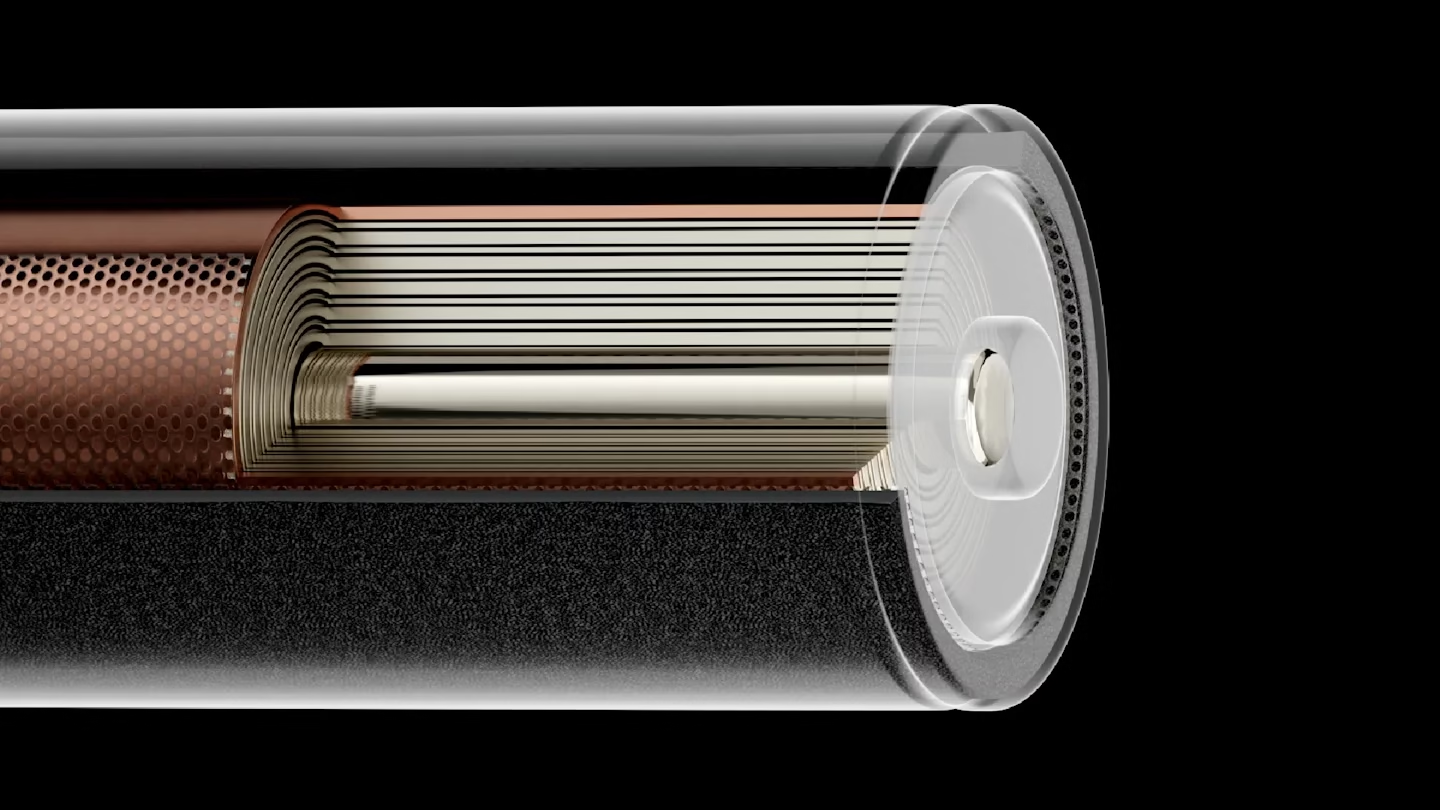
Nexeon silicon anode materials enable rapid charging capabilities for lithium-ion batteries. The technology produces lighter and more cost-effective batteries. Battery performance improvements enhance applications across consumer and commercial sectors. Nexeon materials work with all lithium-ion battery cell types. This includes cylindrical, prismatic, and pouch cell configurations.
Compatibility and Integration Benefits
Used as a silicon-carbon blend, adoption of Nexeon materials happens faster. Integration into existing production operations occurs easily without major changes. NSP1™ enables silicon-graphite hybrid electrode use up to 10% by weight. Silicon’s ability to hold more lithium ions unlocks greater cell design options. More energy storage becomes possible in less physical space.
Corporate Operations and Geographic Presence
Nexeon maintains headquarters in Oxfordshire, United Kingdom. The company operates facilities in Korea for regional market support. Additional operations exist in Japan for Asian market presence. Nexeon employs a skilled multidisciplinary team driving battery technology innovation. The UK location positions the company as part of Oxfordshire’s deep-tech hub.
Leadership Perspective on Strategic Partnership
Dr. Scott Brown serves as CEO of Nexeon leading the company. He stated welcome to Honda as shareholder during technology commercialization phase. The company looks forward to close collaboration while scaling production. This funding round validates both technology and commercial traction effectively. The investment endorses Nexeon’s strategic role in global electrification transition.
Industry Analysis and Market Impact
Brief Glance Intelligence highlighted Nexeon’s journey from Oxfordshire to global partnership. The United Kingdom serves as important hub for deep-tech and green energy innovation. Regional expertise in materials science creates global impact on sustainable economy transition. The silicon anode lithium-ion battery market was valued at approximately USD 327-379 million in 2024 and is projected to grow at 45-47% CAGR through 2035.
Key Benefits Summary
- Silicon anodes provide 10x higher specific capacity than graphite
- Energy density increases by 20-40% with silicon-enhanced materials
- NSP1™ replaces up to 10% graphite as drop-in solution
- NSP2™ unlocks full silicon specific capacity benefits
- Over 290 patents protect Nexeon technology globally
- First global volume production facility now operational
- Compatible with cylindrical, prismatic, and pouch cells
- Enables rapid charging with lighter, cost-effective batteries
Sources: NEXEON