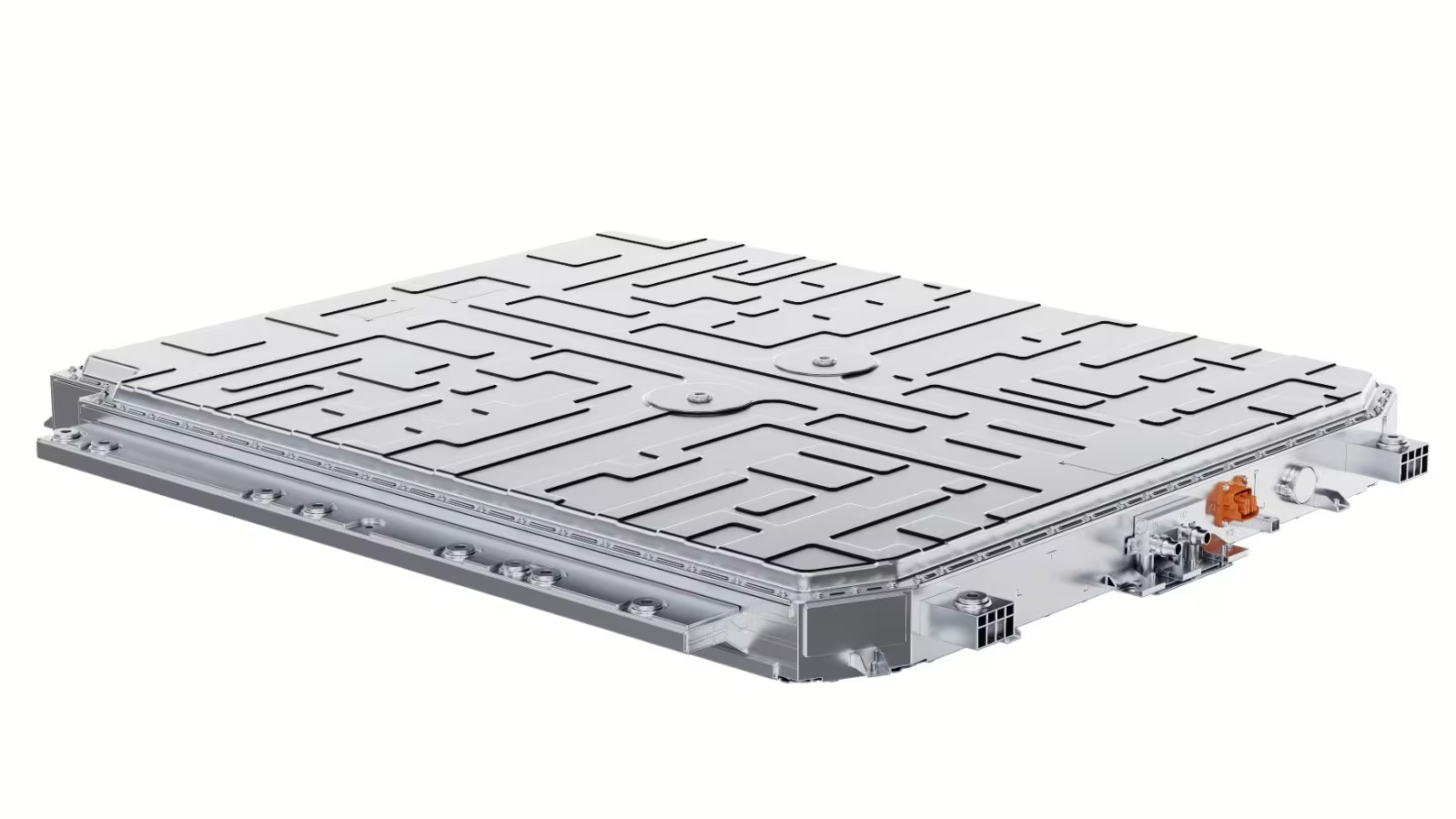

SVOLT Energy has moved its semi-solid battery program from development into volume manufacturing. The company says the first mass-produced 100 kWh Dragon Armor packs have left its Changzhou production line in Jiangsu, China.
The announcement marks an important commercial step for semi-solid battery technology. SVOLT positions the pack as a production-ready option for electric vehicles that need fast charging, safety, and long service life.
Dragon Armor Enters Production
The first batch of Dragon Armor semi-solid fast-charging packs rolled off the line in Changzhou. SVOLT announced the milestone through its official Weibo channel, with chairman and CEO Yang Hongxin presenting the development.
The company says the pack has already received nominations from several customers. However, SVOLT has not yet named the vehicle manufacturers or revealed which models will use the battery.
This launch follows SVOLT’s earlier plan to begin large-scale production of 100 kWh semi-solid batteries in September. The company had also expected production costs to match conventional liquid-electrolyte lithium-ion batteries.
SVOLT is headquartered in Changzhou and develops cells, modules, battery packs, and energy-storage products. Its official company profile describes a full portfolio that spans passenger-vehicle batteries and large-scale storage systems.
Semi-Solid Technology Explained
Semi-solid batteries are also called solid-liquid hybrid batteries. They use both solid and liquid electrolytes to move lithium ions between electrodes.
All-solid-state batteries, by contrast, replace the liquid electrolyte entirely with a solid material. That change could improve safety and energy density, but it still faces major manufacturing challenges.
SVOLT argues that semi-solid cells offer a practical middle path. They can improve thermal stability and safety while retaining manufacturing methods closer to today’s lithium-ion production.
The company does not treat semi-solid batteries as a short-lived bridge technology. Instead, it expects them to remain a mainstream option over the long term, especially in vehicles using ternary battery chemistry.
Fast Charging Without Compromise
The 100 kWh Dragon Armor pack supports a 900-volt electrical architecture. It also enables a 6C charging rate, which is a demanding level of charging power.
SVOLT claims the pack can add 500 km, or 311 miles, of range in 12 minutes. The company has not published the exact test conditions behind this range-replenishment figure.
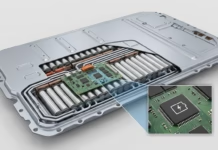
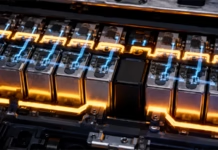
Dual-sided liquid cooling is central to the design. Cooling surfaces at both the top and bottom of the pack help manage heat during high-power charging and discharge.
Heat control matters because rapid charging raises cell temperatures. Better temperature uniformity can reduce stress on the cells and support consistent performance over time.
Key technical features
- 100 kWh total pack capacity for long-range electric vehicles.
- 900-volt high-voltage platform for rapid charging.
- 6C charging capability for faster energy replenishment.
- Claimed 500 km of added range after 12 minutes of charging.
- Liquid cooling at both the top and bottom of the pack.
- Six protective armor layers beneath the battery pack.
- More than 3,000 claimed charge cycles.
- Theoretical driving life of more than 1 million km.
Safety Through Cell and Pack Design
SVOLT uses separator transfer-printing technology at the cell level. The company says this process improves intrinsic safety while preserving fast-charging capability and long service life.
The separator sits between a battery’s positive and negative electrodes. Its quality and structure influence ion movement, heat behavior, and the risk of internal short circuits.
The pack also includes six layers of armor on its underside. SVOLT claims this structure delivers impact resistance three times above China’s national standard.
This protection addresses a practical concern for electric vehicles. Road debris, curb strikes, and underbody impacts can damage battery housings and create safety risks.
SVOLT’s broader Dragon Armor approach uses thermal-electric separation. The company applies this concept to separate heat-related risks from electrical connections, reducing the chance of arcing, ignition, or thermal propagation.
Durability and Long-Term Value
SVOLT says high-speed stacking technology supports a cycle life above 3,000 cycles. It also claims a theoretical lifetime driving distance of more than 1 million km.
These figures are manufacturer claims rather than independently verified results. Even so, they signal SVOLT’s focus on durability as well as charging speed.
Long cycle life can matter greatly for fleet operators, taxi services, and high-mileage private owners. A battery that retains performance after years of use can lower total ownership costs.
The company’s high-speed stacking process is also used across its wider battery portfolio. SVOLT says the method improves safety, consistency, and cost performance in its energy-storage cells.
A Practical Route to Solid-State Goals
SVOLT continues to pursue all-solid-state batteries, but it sees semi-solid technology as the nearer commercial opportunity. The company says all-solid-state batteries remain far from large-scale production.
Its strategy is therefore sequential rather than exclusive. SVOLT plans to advance semi-solid batteries first, then build toward all-solid-state products as the technology matures.
This approach reflects a wider industry reality. Solid-state batteries promise major gains, yet production scale, materials supply, cost, and manufacturing yield remain difficult.
Semi-solid designs can deliver some benefits earlier. They may improve high-temperature stability and reduce thermal-runaway risk while using more established production processes.
SVOLT introduced semi-solid-state batteries as part of a broader technology portfolio at its January Battery Day event. The company presented them alongside Dragon-Scale Armor 3.0 and FORTRESS 2.0 solutions for global automakers.
Value for Long-Range EV Platforms
Automakers face growing pressure to combine long range, rapid charging, safety, and affordable manufacturing. SVOLT’s new pack is designed to address those demands in one system.
A 100 kWh pack can support long-distance electric travel. Meanwhile, 900V architecture and 6C charging can shorten stops and improve usability for drivers.
The pack’s protective structure may also help manufacturers meet stricter safety expectations. SVOLT says its technologies are intended to address rising safety standards and greater system-integration complexity.
Still, several commercial details remain unclear. SVOLT has not disclosed the first production volume, customer names, vehicle platforms, pricing, or the conditions used for its charging claim.
SVOLT’s Market Position
SVOLT began as the power-battery division of Great Wall Motor. It became independent in February 2018 and now operates across battery materials, cells, packs, and energy storage.
The company’s official profile says it researches, produces, and sells cells, modules, packs, and multiple energy-storage categories. These include utility-scale, commercial, home, and portable storage products.
SVOLT’s global EV battery installations reached 22.0 GWh in the first eight months of 2026. That represented 39.3% year-on-year growth and a 2.6% global market share, according to SNE Research data cited by CnEVPost.
In China, SVOLT ranked tenth in power-battery installations during September, with a 1.97% share. In the ternary-battery segment, it ranked fourth with a 6.31% share, according to the China Automotive Battery Innovation Alliance.
From Pilot Line to Mass Production
The production start is significant because it moves semi-solid batteries closer to real vehicles. Many battery technologies remain confined to laboratories, pilot lines, or limited demonstration programs.
SVOLT’s Dragon Armor pack instead enters a mass-production environment. That shift can test whether semi-solid cells can meet automotive requirements for cost, quality, supply, and reliability.
The launch also strengthens SVOLT’s position in the premium fast-charging battery segment. Its combination of high capacity, high voltage, protective design, and claimed durability targets demanding vehicle applications.
The next major test will be customer adoption. Vehicle announcements, real-world charging results, warranty terms, and independent safety testing will show whether the technology performs as promised.