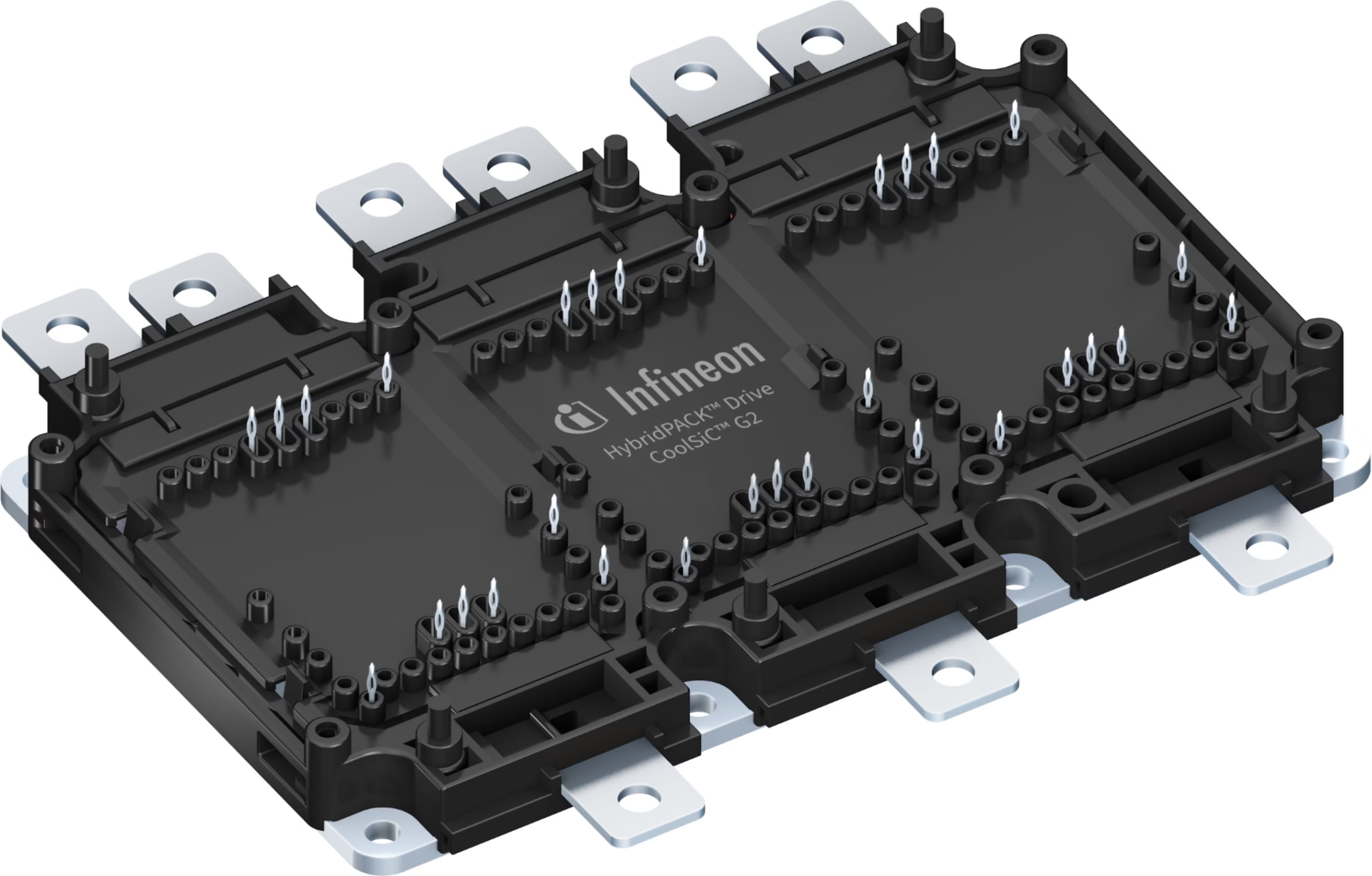

Infineon has introduced a 1300 V silicon carbide module for EV inverters that can run continuously at 205 C. The company says this is a major step beyond typical 175 C designs and targets higher power, better efficiency, and stronger robustness in high-voltage drivetrains.
What Infineon announced
The new module belongs to Infineon’s HybridPACK Drive family. It is already available as the FS01M9R13A7MA2B device, and Infineon says the 205 C capability will also extend to its existing 1200 V SiC portfolio.
The company frames the launch as a way to give automakers and suppliers more design freedom. It can help them push more output through current inverter platforms, or simplify new platforms and cut cost and complexity.
Why the 205 C limit matters
Infineon says the higher temperature capability can raise output current by up to 15 percent versus existing designs. That translates into greater inverter power density without changing the module’s size, footprint, or interfaces.
This matters because a drop-in upgrade is easier for OEMs and Tier 1 suppliers to adopt. It can reduce redesign work, shorten development cycles, and speed time to market for next-generation EV systems.
System-level benefits
The higher thermal headroom also lets engineers rethink cooling. With a module that tolerates more heat, they can use smaller or less complex cooling systems, which can reduce weight and system cost.
Infineon also links the launch to the shift toward battery voltages above 900 V. The module’s 1300 V blocking voltage is meant to improve inverter performance, efficiency, and robustness in that higher-voltage zone.
Company positioning
Infineon presents the launch as part of a broader push in automotive SiC power semiconductors. The company says it combines system understanding, scalable manufacturing, and automotive-grade reliability to strengthen its position in this market.
That message fits Infineon’s wider electric-vehicle strategy. In February 2026, the company said its silicon carbide power semiconductors had been selected for Toyota’s new bZ4X, showing continued traction for SiC in EV power systems.
Industry context
The launch also aligns with the industry’s move toward higher-efficiency EV powertrains. Infineon has previously highlighted SiC benefits such as lower losses, higher thermal resistance, and stronger voltage capability in automotive systems.
Earlier Infineon announcements also show a steady expansion of the HybridPACK Drive family. For example, the company introduced HybridPACK Drive G2 Fusion in 2024 as a plug-and-play module combining silicon and SiC technologies for e-mobility.
Key points
- 1300 V SiC module for EV inverters.
- Continuous operation up to 205 C.
- Up to 15 percent higher output current.
- Drop-in compatibility with existing module interfaces.
- Potentially smaller, simpler cooling systems.
- First 205 C device already released to market.
Sources: Infineon