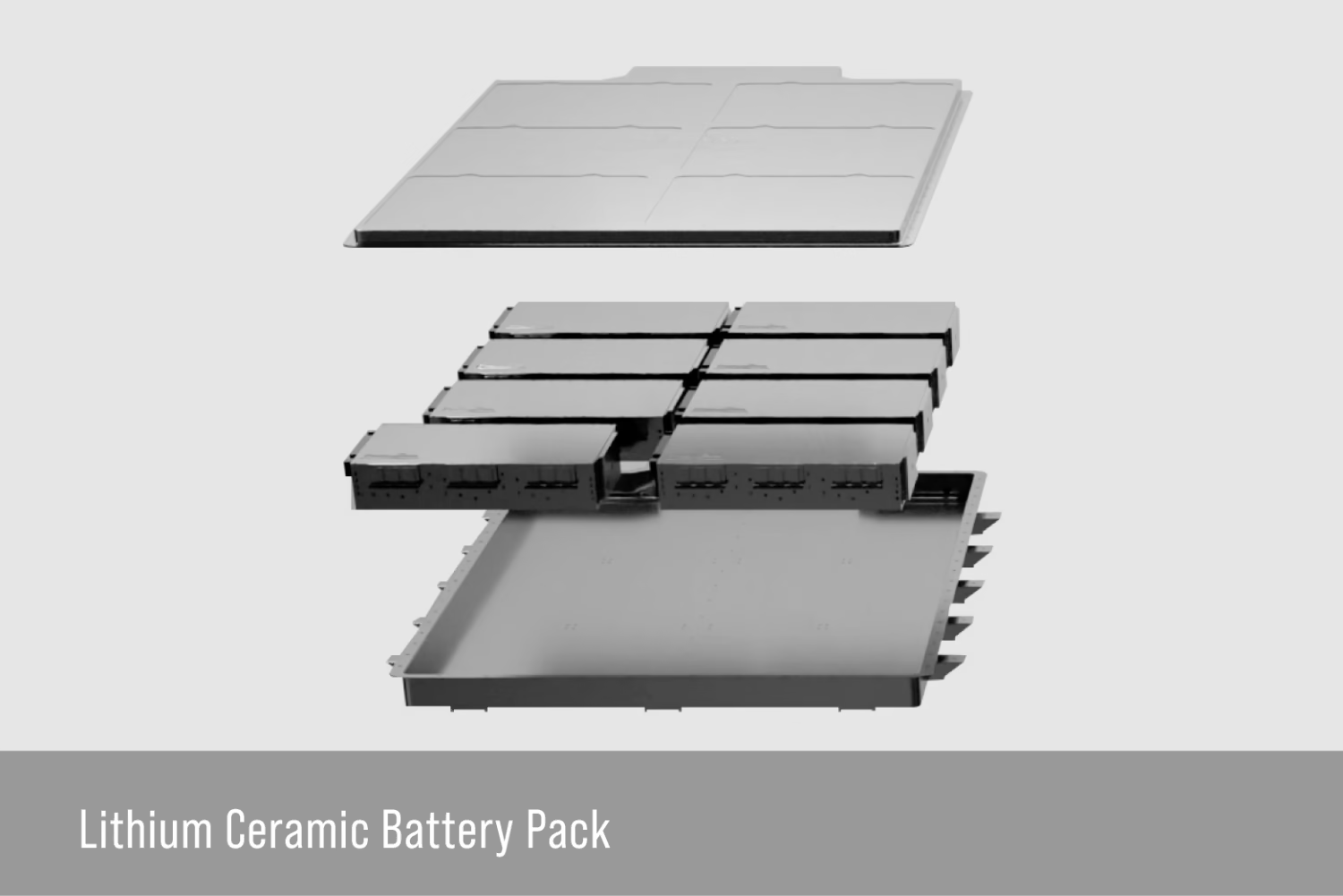

Mercedes-Benz AG and ProLogium Holding Inc. signed a joint testing agreement. This partnership grants Mercedes-Benz priority access to evaluate ProLogium’s latest Gen4 Superfluidized Inorganic Next-Generation Lithium Ceramic Battery cells. The German automaker will conduct comprehensive electrical, thermal, and safety assessments at dedicated facilities. Specialized external testing institutes will also participate in the evaluation process. Test results will determine the technology’s suitability for future vehicle platform integration.
This collaboration extends a nearly ten-year partnership between both companies. Mercedes-Benz previously invested in ProLogium and engaged in joint technical development agreements. The automaker holds a Director position on ProLogium’s Board of Directors. Mercedes-Benz supports ProLogium’s Dunkirk plant development plans actively. The partnership also backs ProLogium’s planned NASDAQ listing in fourth quarter 2026.
Gen4 Battery Technology Architecture
ProLogium’s Gen4 battery platform targets five core advantages simultaneously. These include intrinsic safety, high performance, and high energy density capabilities. Scalable manufacturing and competitive cost structure complete the strategic framework. The technology integrates a non-flammable inorganic electrolyte system throughout. Ceramic separator technology provides additional structural protection layers. ProLogium’s proprietary Active Safety Mechanism prevents thermal runaway conditions effectively.
The Gen4 platform supports fast charging within 6.4 minutes from 5% to 80% capacity. High power output remains available across diverse operating conditions consistently. Good low-temperature performance extends down to -20°C without degradation. Energy density targets reach 400-470 Wh/kg gravimetrically. Volumetric energy density achieves 940-1100 Wh/L specifications.
SF-Ceramion Electrolyte System
The Gen4 battery features ProLogium’s patented SF-Ceramion electrolyte technology. This superfluidized all-inorganic electrolyte system combines solid-state and liquid battery advantages. The architecture retains the Logithium Cell foundation from previous generations. Only 10% of existing Giga-level production equipment requires modification for Gen4 manufacturing. This approach preserves accumulated manufacturing know-how and process stability.
The electrolyte system eliminates organic solvent content completely. Ionic conductivity reaches 57 mS/cm according to SEC filings. This conductivity level supports high-rate charging and discharging operations effectively. The inorganic composition prevents flammability risks during thermal events. Material stability remains consistent across wide temperature ranges reliably.
100% Silicon Anode Implementation
ProLogium’s Gen4 cells incorporate 100% silicon anode materials throughout. This design choice eliminates graphite anode dependencies completely. Silicon anodes enable higher lithium-ion storage capacity per unit mass. The architecture supports the targeted 400-470 Wh/kg energy density range. Silicon integration also contributes to reduced material costs significantly.
The silicon anode works with the ceramic separator architecture seamlessly. Edge-frame structures isolate potential burrs around electrode perimeters effectively. This design provides additional sealing and insulation protection layers. The Logithium Cell Architecture accommodates silicon anode expansion during cycling. Manufacturing processes remain compatible with existing production equipment largely.
Ceramic Separator Technology
ProLogium pioneered 100% ceramic separator technology commercially in 2013. The company holds extensive patent portfolios covering separator manufacturing processes. Ceramic separators replace traditional polymer-based separator materials completely. This substitution eliminates thermal shrinkage risks during high-temperature exposure. The ceramic composition maintains structural integrity under mechanical stress conditions.
The separator technology enables roll-to-roll coating processes efficiently. ProLogium commercialized high-efficiency roll-to-roll ceramic separator coating early. This manufacturing approach supports GWh-scale production volumes consistently. The ceramic separator works with the SF-Ceramion electrolyte system synergistically. Combined effects enhance overall cell safety and performance characteristics significantly.
Active Safety Mechanism Details
ProLogium’s Active Safety Mechanism represents a proprietary innovation layer. The ASM actively stabilizes electrode active materials during high-temperature conditions. This intervention prevents thermal runaway propagation effectively. The mechanism operates independently from passive safety features traditionally. Active control enables response before critical temperature thresholds are reached.
The ASM integrates with the non-flammable material system comprehensively. Combined intrinsic and active safety approaches control thermal events reliably. High energy density cells maintain safety margins without compromise. The mechanism supports simplified pack design architectures significantly. Complex additional pressure modules become unnecessary with ASM integration.
Manufacturing Platform Evolution
ProLogium’s manufacturing platform evolved through three distinct generations progressively. First-generation Sheet-by-Sheet production lines began commercial operations in 2013. Second-generation Roll-to-Roll lines introduced continuous manufacturing in 2017. Third-generation Giga-level platforms entered operation during 2024. Each generation built upon process experience from previous iterations systematically.
The Taoke Gigafactory in Taoyuan, Taiwan represents current Giga-level capacity. This facility achieved GWh-scale manufacturing validation successfully. C-sample production and Demo Car programs utilize this capacity currently. More than 2.4 million battery cells shipped since 2013 commercially. Approximately 10,000 automotive battery samples delivered to partners additionally.
Dunkirk Gigafactory Development
ProLogium’s Dunkirk Gigafactory in France targets European market supply. The facility holds a maximum designed production capacity of 44 GWh. First phase construction aims for 4.0 GWh annual designed capacity. Progressive achievement of this capacity expects completion by 2030. The site will work closely with ProLogium’s Paris-Saclay R&D center.
Groundbreaking ceremonies for the first phase occurred in February 2026. Detailed design and construction activities advance through 2026 currently. The facility will replicate the proven Taiwan production model. Commercial cells will serve European customers at platform-supporting scales. Localized European manufacturing reduces supply-chain dependencies significantly.
Testing Protocol Specifications
Mercedes-Benz will execute extensive electrical performance testing protocols. Thermal characteristic assessments will evaluate temperature-dependent behaviors comprehensively. Safety testing will examine failure modes and containment capabilities. Dedicated Mercedes-Benz facilities will host primary testing activities. Specialized external testing institutes will provide independent validation additionally.
The testing scheme builds upon nearly 10 years of prior collaboration. Previous joint development included GEN 3 hybrid-solid-state technology validation. Multiple lithium ceramic battery formats underwent validation previously. Pouch and prismatic cell configurations received evaluation attention. ProLogium’s Bi-Polar technology also underwent joint assessment processes.
Strategic Partnership Context
Vincent Yang serves as Founder and CEO of ProLogium currently. He emphasized the evolution from early cell development to Gen4 testing. True value emerges from turning innovation into scalable manufacturing. Commercial viability requires proven production capabilities beyond laboratory demonstrations. Mercedes-Benz’s early investment supported European expansion plans significantly.
Jörg Burzer holds Board of Management membership at Mercedes-Benz Group AG. He serves as Chief Technology Officer for Development and Procurement. Burzer highlighted Mercedes-Benz’s commitment to electric mobility leadership. Technological innovation drives the company’s future strategy direction. ProLogium’s pioneering approach complements Mercedes-Benz’s testing capabilities effectively.
Market Positioning and Applications
ProLogium targets AI data centers with Gen4 battery technology. Electric vehicle applications represent primary automotive market opportunities. Maritime propulsion systems offer additional deployment possibilities. Aerospace applications require high energy density and safety characteristics. Unmanned Systems markets already utilize ProLogium’s LCB platform.
The company entered definitive business combination agreements in May 2026. Translational Development Acquisition Corp. facilitates NASDAQ listing plans. ProLogium expects listing under ticker symbol PRLG in 4Q2026. U.S. public capital market access supports technology commercialization phases. Global capacity expansion requires substantial investment capital resources.
Technical Performance Benchmarks
ProLogium’s Gen3.5 cells achieved 381 Wh/kg gravimetric energy density. Volumetric energy density reached 903 Wh/L specifications concurrently. TÜV validation confirmed these performance metrics independently. UL Solutions testing supported all-solid-state classification under GB/T 43568-2026. Weight loss measurements remained below 0.05% after vacuum exposure.
The Gen4 platform targets 400-470 Wh/kg energy density ranges. Volumetric targets extend from 940 to 1100 Wh/L specifications. Fast charging cycles support 1000+ repetitions without significant degradation. Stable performance maintains consistency from -20°C operating conditions. Specific energy improvements reach 1.56x compared to conventional designs.
Sources: ProLogium