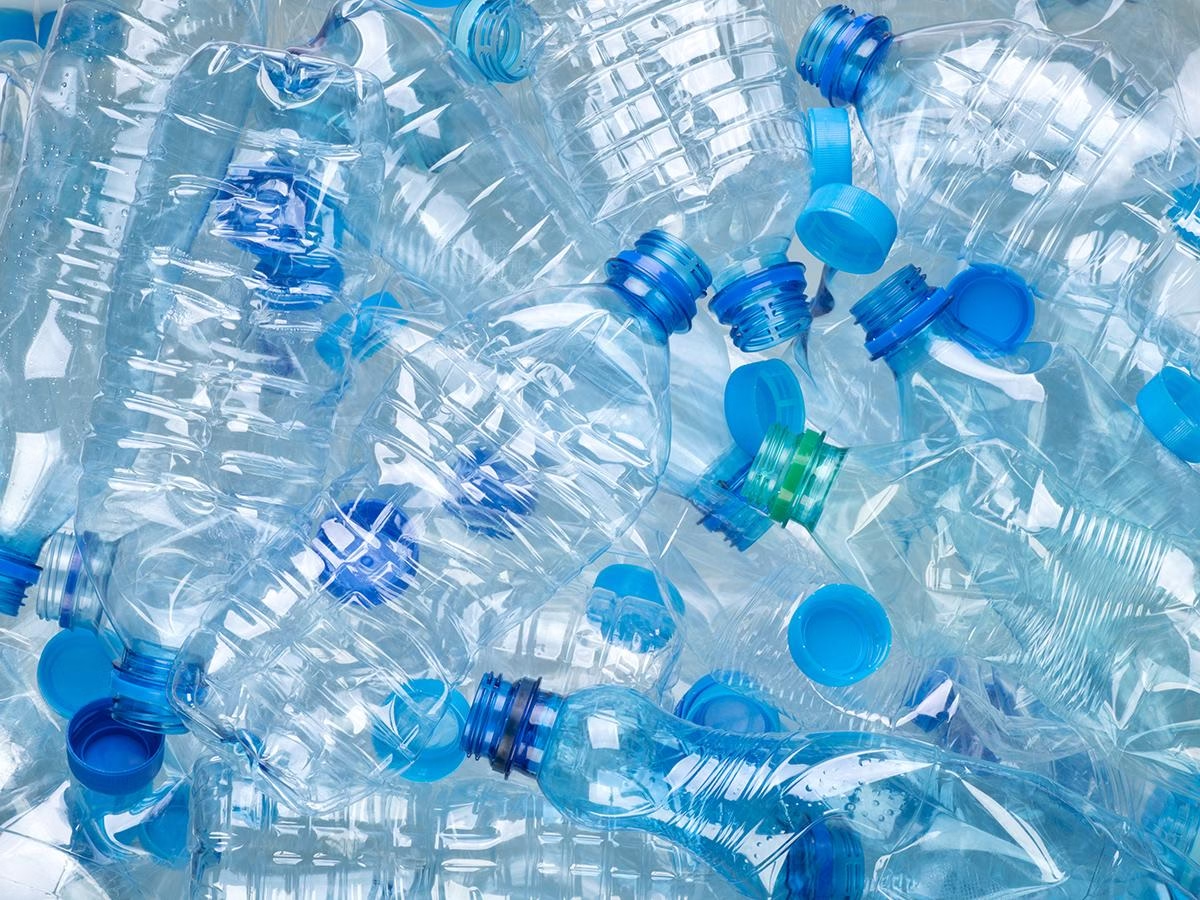

A Penn State research team has shown that discarded PET bottles can become highly ordered synthetic graphite. The material could support batteries for electric vehicles, smartphones, and grid storage. The study appears in Diamond and Related Materials and points to a new use for one of the world’s most common plastics.
The core idea is simple but important. Instead of treating PET as waste, the researchers treated it as a carbon source. That shift matters because battery-grade graphite remains essential for lithium-ion anodes, and demand continues to rise.
Graphite’s Importance
Graphite plays a central role in lithium-ion batteries. It stores and releases lithium ions during charging and discharging, which makes it a key anode material. Penn State also notes that graphite is used beyond batteries, including in aluminum refining and steelmaking.
This makes supply a strategic issue. Penn State researchers have previously warned that clean energy growth will intensify graphite demand. At the same time, current graphite supply still depends heavily on petroleum-derived coke, coal tar pitch, and mined graphite.
Process Working
The Penn State team shredded PET plastic and mixed it with a small amount of graphene oxide before applying controlled heat. During heating, the carbon atoms in the plastic reorganized into graphitic structures. The graphene oxide acted as a guide for that transformation, helping create a more ordered final material.
The researchers found that 2.5% graphene oxide by weight produced the best result. That sample formed large, well-ordered crystallites and outperformed commercial natural graphite in structural ordering. The method also avoids metal catalysts, which can leave impurities and require extra purification.
What Makes It Important
This work stands out because it turns a low-value waste stream into a high-value material. Penn State says the approach could lower energy use compared with conventional graphite production. It could also reduce emissions tied to petroleum-based feedstocks and mining.
The process may also scale more easily than many lab-only methods. Penn State says the graphitization heat treatment does not require major infrastructure. That is a practical advantage if researchers later move toward larger manufacturing trials.
Key Findings
- Waste PET can be converted into highly ordered synthetic graphite.
- 2.5% graphene oxide by weight produced the highest-quality material.
- The PET-derived graphite showed larger, more ordered crystallites than commercial natural graphite.
- The method does not rely on metal catalysts.
- The approach may support battery, recycling, and clean-energy supply chains.
Battery And Recycling Impact
The battery angle is the most immediate commercial interest. Penn State notes that every electric vehicle needs significant carbon material, and graphite demand rises as EV production grows. If the process proves scalable, it could help ease pressure on the graphite supply chain.
The recycling angle is equally compelling. PET is one of the most common single-use plastics, especially in beverage bottles. Turning that waste into battery material could improve recycling economics and create a stronger market for collected plastic.
Research Context
This is not the first Penn State effort in this direction. In 2022, the university described related work on upcycling plastic waste into graphite as a possible alternative to landfills. The new study takes that idea further by demonstrating a more ordered graphite product from PET waste.
The researchers also frame the work as a materials-supply solution, not just a recycling story. Their goal is to connect waste management with energy storage demand. That makes the research relevant to both battery developers and materials policymakers.
Remaining Questions
The result is promising, but it is still a research-stage advance. Penn State says more work is needed to test large-scale production and real battery performance. Those two points will determine whether the method becomes a commercial route or remains a lab demonstration.
Cost will also matter. The process must compete with established graphite supply chains on price, consistency, and throughput. If it succeeds, however, it could give PET bottles a second life in the clean-energy economy.
Sources: Penn State