
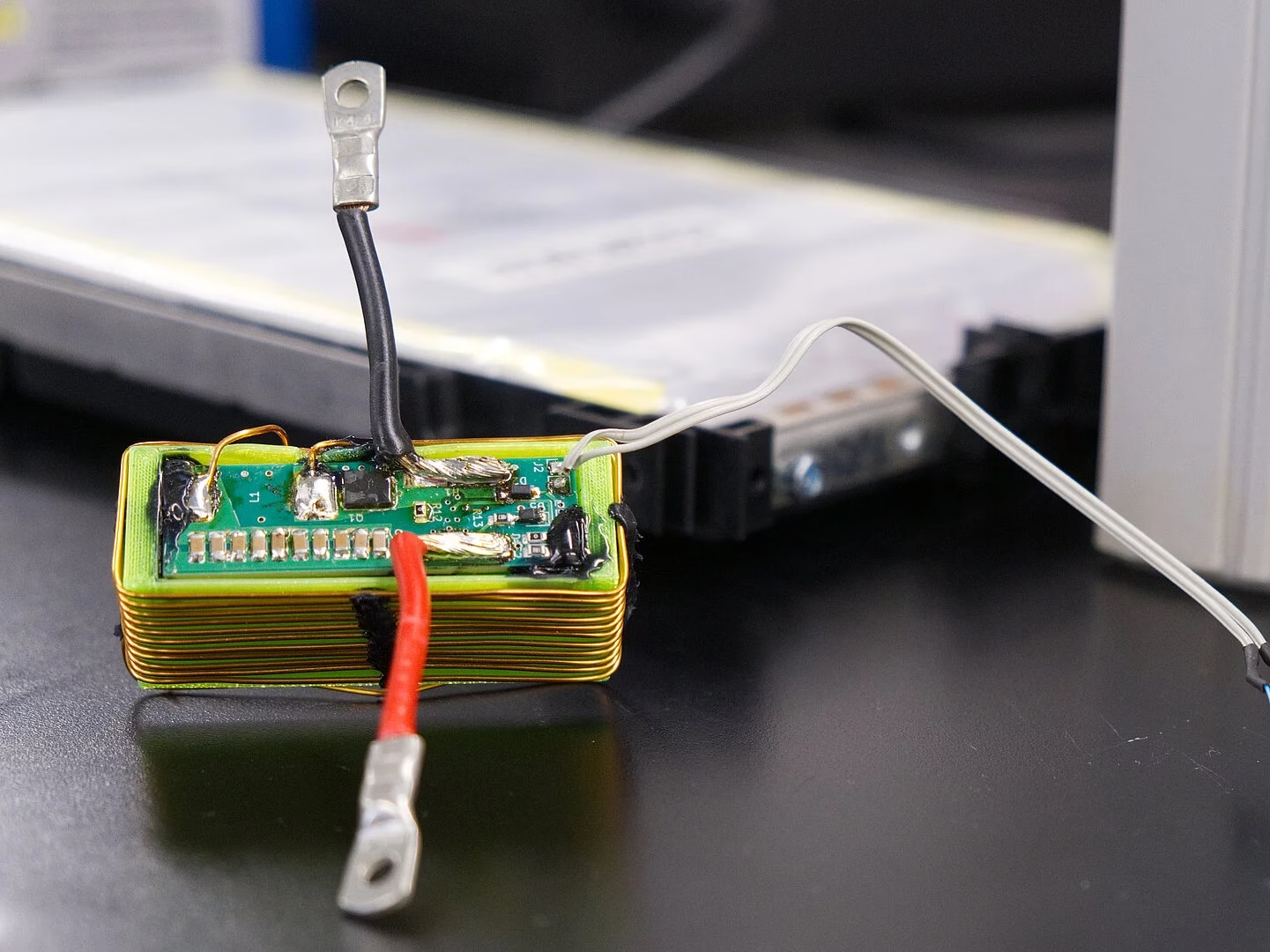

Researchers at Kiel University have developed a battery communication system that sends sensor data through the cell’s existing electrical connections. The concept could make battery monitoring simpler, cheaper, and safer for electric vehicles and energy storage systems.
The idea is straightforward but powerful. Instead of adding separate wiring for data transfer, the battery itself carries information outward through the same paths used for power flow.
Internal monitoring through power lines
The system places a small circuit inside the battery cell. That circuit collects sensor signals and converts them into digital information for transmission.
This approach removes the need for extra communication lines inside tightly packed battery structures. It also gives engineers a more direct view of what is happening inside the cell during operation.
The researchers describe this as a battery that can “speak” about its own condition. In practice, that means internal data can reach the outside world without changing the battery’s basic power connections.
Safety gains for battery systems
Internal temperature changes often begin before external signs appear. That makes direct monitoring inside the cell especially useful for safety-focused applications.
The Kiel team says the system could help detect heat buildup and gas formation earlier. Earlier detection can support better battery control and reduce the risk of serious failure.
This matters for electric vehicles, where battery safety and thermal stability are critical. It also matters for stationary storage systems that must operate reliably over long periods.
Cost and integration advantages
The university reports that the concept could be around 35 percent cheaper than conventional solutions. That estimate reflects the use of existing battery connections instead of separate sensor wiring.
Lower cost is only one advantage. The design may also simplify future battery architecture by reducing the number of components needed for monitoring.
The researchers also see room for miniaturization. Over time, the communication circuit could become smaller or be integrated directly into new battery materials.
Wider sensor possibilities
Temperature is only one type of measurement this system can support. The same communication principle could also work with pressure sensors, gas sensors, and other internal measurement devices.
That flexibility gives the technology broader value in battery diagnostics. It could also help researchers study how new materials behave during charging and discharging.
More internal data can improve understanding of battery aging, performance loss, and failure modes. That makes the system useful not just for products, but also for research.
Relevance for electric vehicles
Electric vehicles need batteries that are compact, efficient, and safe. Any communication method that avoids extra wiring inside the cell is therefore valuable.
The Kiel system could support smarter battery management systems in future EV platforms. It may also help manufacturers design batteries that provide richer internal data without adding complexity.
For EV developers, that combination is important. Better monitoring can improve protection, durability, and confidence in high-voltage systems.
Use cases beyond EVs
The researchers say the concept could also be used in wind and solar storage systems. Home battery systems are another likely application.
That broader use case makes sense because all of these systems depend on reliable battery performance. Better internal visibility can improve maintenance, safety, and long-term operation.
The approach fits well with the wider energy transition. As battery demand grows, smarter monitoring tools become more important.
Main points from the research
- The battery transmits internal sensor data through existing power connections.
- Separate communication wires are no longer necessary.
- The design could improve safety by detecting internal changes earlier.
- The university estimates the system may be about 35 percent cheaper.
- The approach could support temperature, pressure, and gas sensing.
- Potential applications include electric vehicles, renewable storage, and home batteries.
Research significance
This work adds a new direction to battery monitoring technology. Rather than treating sensing as an external add-on, the researchers integrate communication into the battery itself.
That shift can reduce complexity while improving access to internal data. It also supports safer battery design in systems where space, cost, and reliability all matter.
The study was published in Communications Engineering. It is presented as an early step toward more intelligent batteries that can monitor and report their own condition.
Sources: Kiel