
POSCO has started a national project with Hyundai Motor and eight other organizations to develop next-generation electrical steel for EV motors. The goal is not only a new material. The real target is better motor efficiency, lower losses, and stronger production capability.
What the project is about
The consortium centers on 6.5% silicon-content wide electrical steel sheet. POSCO leads the work as the main research institution. The group includes Hyundai Motor, SL Corporation, Polepair Electric, RIST, KITECH, KATECH, the University of Ulsan, Pukyong National University, and KOMERA.
This is a collaborative project across the full EV value chain. It covers material development, core production, motor manufacturing, and vehicle testing. That structure matters because the material must prove itself inside a real drive motor, not only in a lab.
Silicon matters
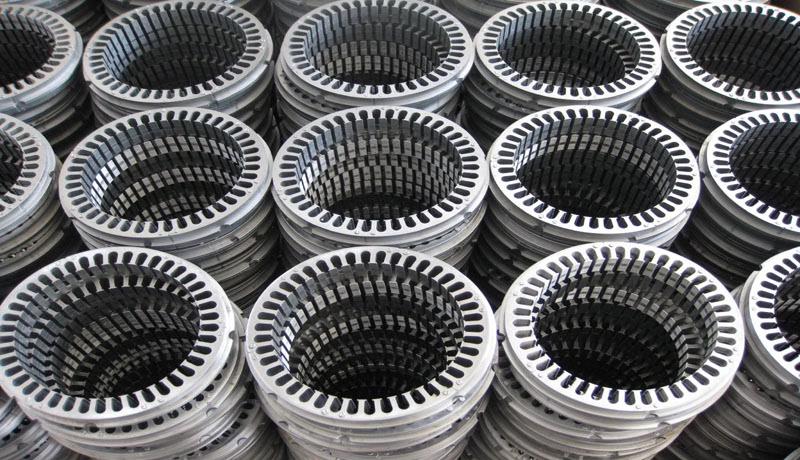
Electrical steel plays a crucial role in EV motors. It helps guide magnetic flux inside the motor core, so its quality affects losses and efficiency. When those losses fall, the motor wastes less energy as heat.
The 6.5% silicon target is important because higher silicon content can reduce iron loss, especially at high rotational speeds. That can support better energy use in EV drivetrains. In simple terms, the motor can do more useful work with less wasted power.
Technical challenge
The material brings a major manufacturing challenge. As silicon content rises, the steel becomes more brittle. That makes it harder to roll, form, and process into wide thin sheets.
So the real innovation is not just the chemistry. It is the ability to produce this material consistently at scale. If the consortium solves that, it can turn a promising lab material into a practical industrial product.
The efficiency wins
The biggest win is lower iron loss in the motor core. Less loss means less heat, which improves overall motor efficiency. That efficiency gain can support longer driving range or lower energy use for the same distance.
Another win is better thermal behavior. When a motor wastes less energy, it runs cooler and may need less aggressive cooling. That can simplify system design and improve durability.
There is also a packaging advantage. If the steel delivers higher efficiency, automakers can improve motor performance without redesigning the whole vehicle architecture. That makes the technology easier to adopt in large-scale EV programs.
Consortium structure matters
This project is more than a materials announcement. It is an attempt to connect research, manufacturing, and vehicle validation in one chain. That reduces the gap between a promising material and a real commercial application.
Hyundai Motor’s role is especially important because it brings the vehicle and motor-use perspective. POSCO brings materials and steelmaking expertise. The research institutes and universities add testing, analysis, and process development support.
That mix improves the chance of turning a technical concept into a usable supply-chain solution. It also helps standardize production methods, which is essential for mass adoption.
What the industry can gain
If the project succeeds, Korean suppliers can strengthen their position in EV powertrain materials. That matters because electrical steel is a strategic component, not a commodity part. The companies that master it can influence the efficiency ceiling of future motors.
The project may also reduce reliance on outside sources for advanced electrical steel know-how. That gives domestic automakers and suppliers more control over quality, cost, and development speed. In a fast-moving EV market, that kind of control is valuable.
Affects on EV buyers
For drivers, the benefit is not visible at first glance. However, improved motor efficiency can support better range, better energy use, and potentially lower battery stress. Those gains matter because they affect daily driving and long-term vehicle performance.
The effect may also show up in heat management and operating stability. A more efficient motor can help keep the powertrain working in a healthier temperature range. That can support reliability over time.
Why this is important now
The EV market is entering a phase where small efficiency gains matter more. Battery chemistry still matters, but powertrain efficiency remains one of the clearest ways to improve vehicle performance. Materials improvements inside the motor can therefore have an outsized impact.
This project fits that trend well. It does not chase a flashy concept. Instead, it focuses on a practical component that sits at the heart of EV efficiency.
Key project points
- POSCO leads a 10-member consortium for EV electrical steel development.
- The target material is 6.5% silicon-content wide electrical steel.
- The project covers materials, core fabrication, motor production, and vehicle validation.
- Hyundai Motor adds the vehicle integration and validation perspective.
- The main technical challenge is producing brittle high-silicon steel at scale.
What to watch next
The most important next step is proof of performance in real drive motors. Lab data can show promise, but vehicle validation will show whether the gain survives practical use. That will determine whether the material becomes a true EV industry upgrade.
The second thing to watch is manufacturability. If the consortium can standardize production of wide sheets, the project will move from research to industrial relevance. That is the point where the technology becomes commercially meaningful.
Sources: POSCO