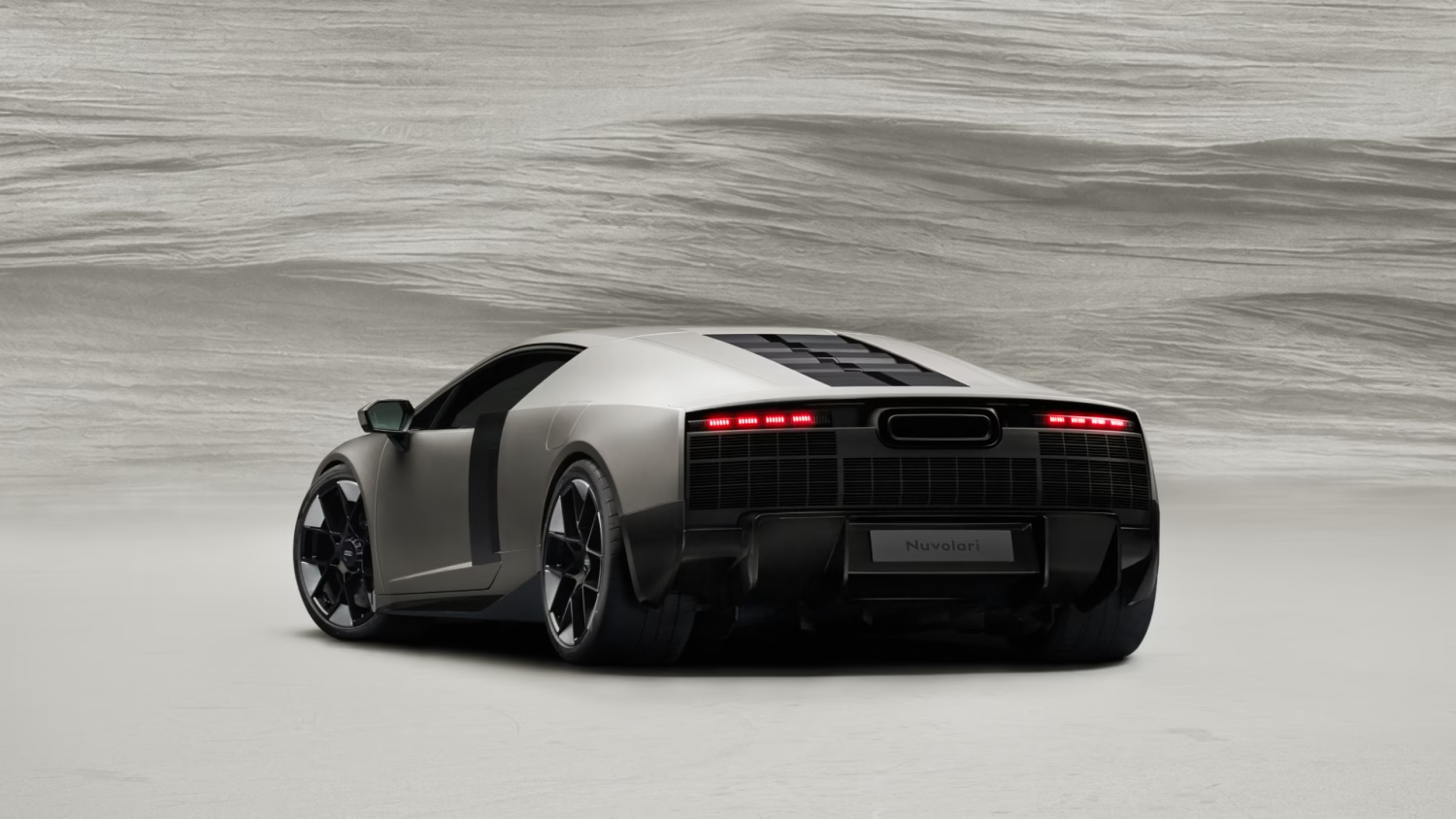

The Audi Nuvolari represents Audi’s first supercar featuring a high-performance hybrid powertrain. This plug-in hybrid combines a 4.0-liter twin-turbo V8 engine with three independent axial-flux electric motors. The combustion engine produces 800 PS (588 kW) and reaches a 10,000 rpm redline. Each electric motor delivers 110 kW, creating a combined system output of 1,001 PS (736 kW).
Two front-mounted electric motors generate 2,150 Nm torque each for real torque vectoring. The third motor sits between the V8 engine and eight-speed dual-clutch transmission. A 7.3 kWh lithium-ion battery supplies energy and supports brake recuperation. This setup enables advanced energy flow management throughout the drivetrain.
The Nuvolari accelerates 0–100 km/h in 2.6 seconds and reaches 200 km/h in 6.8 seconds. Top speed exceeds 350 km/h (217 mph). Production is limited to exactly 499 units worldwide. Deliveries begin in the first half of 2027.
World-First quattro Predictive Ride All-Wheel Drive System
Audi introduces a world premiere with quattro predictive ride, the first predictive intelligent quattro system. This system processes current driving conditions using a highly precise vehicle status model. It automatically adjusts power distribution in real time based on driving style.
The predictive quattro system delivers specific quattro feeling while combining maximum agility on different surfaces. Drivers can adjust traction control levels to choose their preferred traction level. The system adapts intelligently to support better driving stability and increased driving fun.
Two axial-flux machines on the front axle enable torque vectoring for agilization and stabilization. This represents the next generation of Audi’s legendary quattro all-wheel drive. The system integrates with traction control, stability control, suspension, and engine management.
Formula 1-Inspired Active Aerodynamics and Vertical Frame Design
The Audi Nuvolari brings Formula 1-inspired features to a production vehicle through active aerodynamics and dynamic energy management. An active rear wing including a DRS button on the steering wheel works like in Formula 1 cars. The driver can push this button to reduce drag instantly.
A vented front end known as an S-duct improves aerodynamic efficiency and enables front downforce. The Vertical Frame consists of 64 aluminum tiles that precisely guide airflow through the integrated concealed S-duct. These tiles change their angle in position to allow optimum airflow.
Active aerodynamics purposefully combine performance and efficiency. The system is always one step ahead through intelligent aerodynamic control. Power, braking, and aero work as one to keep the driver in complete command.
Key Aerodynamic Components
- Concealed S-duct on front axle for downforce
- 64-segment Vertical Frame with adjustable aluminum tiles
- Fully adjustable active rear aerodynamic wing
- DRS button integrated on steering wheel
- Maximum downforce through active aero integration
- Real-time airflow optimization
Advanced Audi Space Frame Carbon Exterior Construction
The next level of Audi Space Frame features a carbon exterior reinvented for absolute precision. Audi invented the aluminum space frame (ASF) in the 1990s and now combines it with full carbon fiber exterior skin. This represents a world premiere in material combination.
Lightweight construction was a fundamental principle from the beginning of development. The Ultralight and Ultra-rigid frame is designed for absolute precision. The bodywork is made entirely from carbon-fiber composite on an aluminum space frame structure.
Development began in March 2025 and was completed in just 14 months. A small team worked in utmost secrecy on this project. The Audi Nuvolari will be partially assembled at Lamborghini facilities in Neckarsulm.
Motorsport Brake System and Track-Focused Performance Features
The Nuvolari features CCMR carbon ceramic brake system with motorsport-inspired technology. Audi claims the Ceramic Pro brakes deliver deceleration on par with current Formula 1 cars. The brake-by-wire system includes 10-piston front calipers with 420 mm discs.
Four-piston rear calipers with 410 mm discs complete the braking system. The car rides on Bridgestone Potenza Race tires sized 255/35 ZR 20 front and 325/30 ZR 21 rear. Forged aluminum wheels feature a center-lock design, another Audi first.
Track mode includes separate settings for wet, dry, race, and traction control off. Drive modes include balanced, dynamic, dynamic plus, and fully electric. The interior features carbon-fiber seat bases and backrests for maximum performance.
Complete Technical Specifications List
| Specification | Value |
|---|---|
| System output | 1,001 PS (736 kW) |
| V8 engine power | 800 PS (588 kW), 730 Nm |
| Engine redline | 10,000 rpm |
| Electric motors | 3 axial-flux, 110 kW each |
| Front motor torque | 2,150 Nm each |
| Battery capacity | 7.3 kWh lithium-ion |
| 0–100 km/h | 2.6 seconds |
| 0–200 km/h | 6.8 seconds |
| Top speed | >350 km/h (>217 mph) |
| Production limit | 499 units worldwide |
| Deliveries | First half 2027 |
| Transmission | 8-speed dual-clutch |
| Brakes | Ceramic Pro brake-by-wire |
| Tires | Bridgestone Potenza Race |
The Nuvolari embodies Audi ‘s brand values in its most visceral form through progress through technology. Every design part has purpose with no decoration left. This radical simplicity reduces everything to what is essential. The design follows four principles: clear, technical, intelligent, and emotional.
Technology exists as a means to an end, and that end is always emotion. Audi wanted to prove technology has power to excite, shock, and elevate your mind. The vehicle supports drivers to trespass their limits in courage and imagination. This represents the radical next design philosophy for Audi.
Sources: Audi