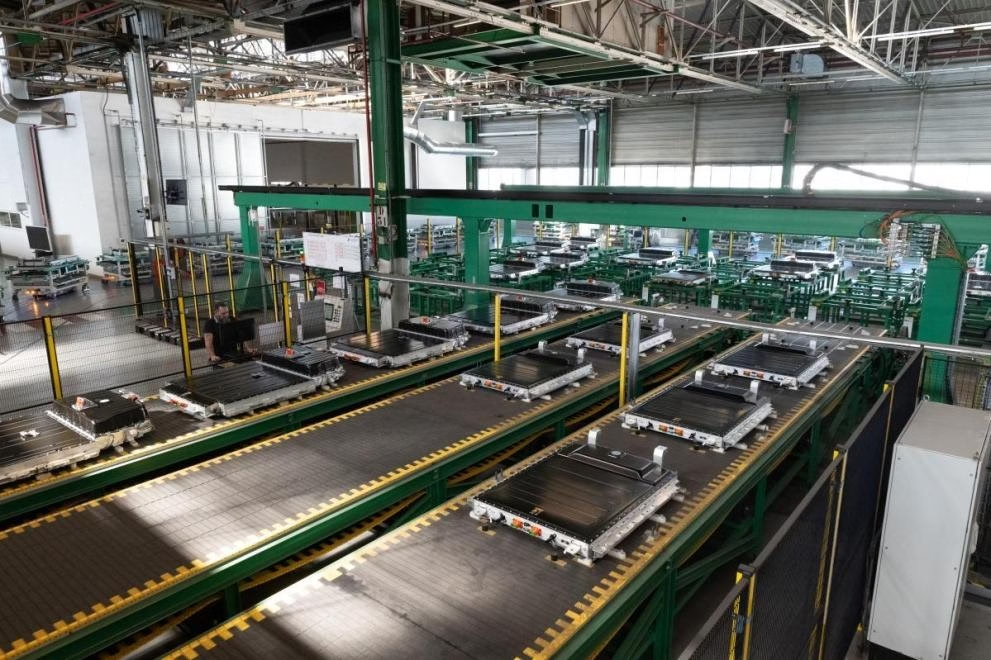

The European Commission has formally created the Battery Booster Facility. This program will mobilize up to €1.5 billion to support battery cell manufacturing projects across Europe. The funding comes directly from revenues generated by the EU Emissions Trading System, managed through the Innovation Fund. The facility targets a critical moment in industrial expansion, helping projects that still need financial support before reaching commercial operation.
The main goal is to strengthen competitiveness, attract private investment, and reinforce Europe’s strategic autonomy in clean technology. The Commission views batteries as essential for transport decarbonization, energy security, and long-term industrial independence. By supporting domestic battery production, the EU aims to keep value creation within Europe rather than relying on imports.
How the Funding Works
The Battery Booster Facility will provide interest-free loans instead of traditional grants. This structure is designed to improve capital discipline and push companies toward faster commercial viability. Each approved project can receive up to €500 million in funding. The loan-based approach also encourages companies to manage resources more carefully while accelerating production scale-up.
Projects must focus on battery technology suitable for electric vehicles. However, buyers may use the battery output for other applications beyond EVs. Production must remain within the European Economic Area, and each project must reach at least 10GWh of capacity. These conditions ensure the funding supports meaningful industrial expansion rather than small pilot operations.
Selection Criteria and Timeline
Applications will be evaluated based on three key factors: technical maturity, financial maturity, and overall value for the European economy. Projects closer to commercial deployment will be prioritized. The Commission plans to launch the call for proposals in the third quarter of 2026. The initial call will run for approximately six weeks, giving companies a focused window to submit applications.
The Commission aims to approve the first projects and make the first payments before the end of 2026. This aggressive timeline signals strong urgency around battery manufacturing scale-up. The EU wants quick industrial impact and intends to move faster than previous funding rounds. Faster approval also helps European companies compete with global rivals who already have larger production capacity.
Why the EU Is Acting Now
Battery manufacturing remains central to Europe’s clean-energy and industrial strategy. Batteries support transport decarbonization, energy security, and industrial autonomy. The Commission presents this Facility as part of a broader effort to maintain battery value creation within Europe. Without stronger domestic capacity, Europe risks losing influence in the global electric vehicle market.
The new move builds on earlier EU battery initiatives. In December 2024, the Innovation Fund launched a €1 billion call specifically for battery cell manufacturing. The Commission and the European Investment Bank also announced a €200 million top-up to the InvestEU guarantee for battery investment. These earlier steps laid groundwork for the current €1.5 billion facility.
What Changed Compared to Earlier Programs
The latest initiative shifts from broad support to direct scale-up financing. It gives the Commission a more targeted tool for firms already close to industrial deployment. Battery manufacturing often requires heavy upfront capital before revenue starts flowing. This Facility addresses that gap more directly than previous grant-based programs.
The Commission also links the Facility to its Battery Booster Strategy announced in December 2025. A public consultation followed in February and March 2026 before formal adoption. This shows the initiative moved through a structured policy process before launch. The strategy includes additional measures beyond funding, such as raw material security and export restrictions.
Industry Implications for Automakers and Suppliers
For automakers, the Facility could improve access to European battery supply chains. The Commission explicitly states the program should help the European automotive industry increase EV production using European batteries. This could reduce dependence on imported cells and lower strategic supply risks. Companies may find it easier to secure long-term battery contracts with domestic producers.
The initiative may also help Europe compete globally in battery manufacturing. By backing companies during the capital-heavy ramp-up phase, the EU hopes to close the gap between innovation and mass production. Global competitors like China and the United States already have larger production volumes. Stronger European capacity could help European automakers maintain cost competitiveness.
Impact on Battery Technology Development
The funding supports battery technology suitable for electric vehicles but allows output use beyond EVs. This flexibility encourages companies to develop batteries with broader applications. Examples include energy storage systems, industrial equipment, and commercial vehicles. Broader applications may improve project economics and reduce investment risk.
Projects must reach at least 10GWh capacity, which ensures meaningful industrial scale. This threshold pushes companies toward manufacturing facilities rather than small pilot lines. Larger capacity also helps European battery suppliers meet demand from multiple automakers. It strengthens the overall battery ecosystem in Europe.
Key Requirements and Conditions
Production must stay within the European Economic Area. This geographic requirement ensures the funding creates jobs and industrial capacity inside Europe. The Commission wants to prevent companies from using EU money to build factories abroad. All manufacturing facilities receiving support must operate within EU borders.
Each project must reach at least 10GWh of battery capacity. This minimum ensures funding supports substantial industrial expansion. Smaller pilot operations do not qualify. The threshold aligns with the scale needed to supply multiple automaker production lines. It also helps European suppliers compete with larger global manufacturers.
The loan-based structure requires companies to demonstrate financial maturity. Projects must show they can operate profitably after receiving support. This condition reduces risk for the Innovation Fund and ensures sustainable operations. Companies must prepare detailed financial plans and commercialization strategies.
Future Outlook and Expected Outcomes
The Commission expects the Facility to accelerate investment in European battery manufacturing. Interest-free loans should lower financing costs and improve project viability. This could attract additional private capital from investors and financial institutions. The combined effect may create a stronger battery industrial base across Europe.
The program aims to strengthen Europe’s position in the global battery market. By supporting scale-up during the capital-intensive phase, the EU hopes to close the production gap with competitors. Faster approval and payment timelines show the Commission wants measurable results within 2026. Early projects will demonstrate whether the facility can deliver rapid industrial impact.
Sources: European Commission