
OCSiAl will supply single wall carbon nanotubes to PowerCo’s Salzgitter facility for Volkswagen Group’s Unified Cell platform. The deal is technically significant because OCSiAl says its nanotube solutions improve conductivity, heat dissipation, and electrode stability in high-performance batteries.
Supply deal and battery role
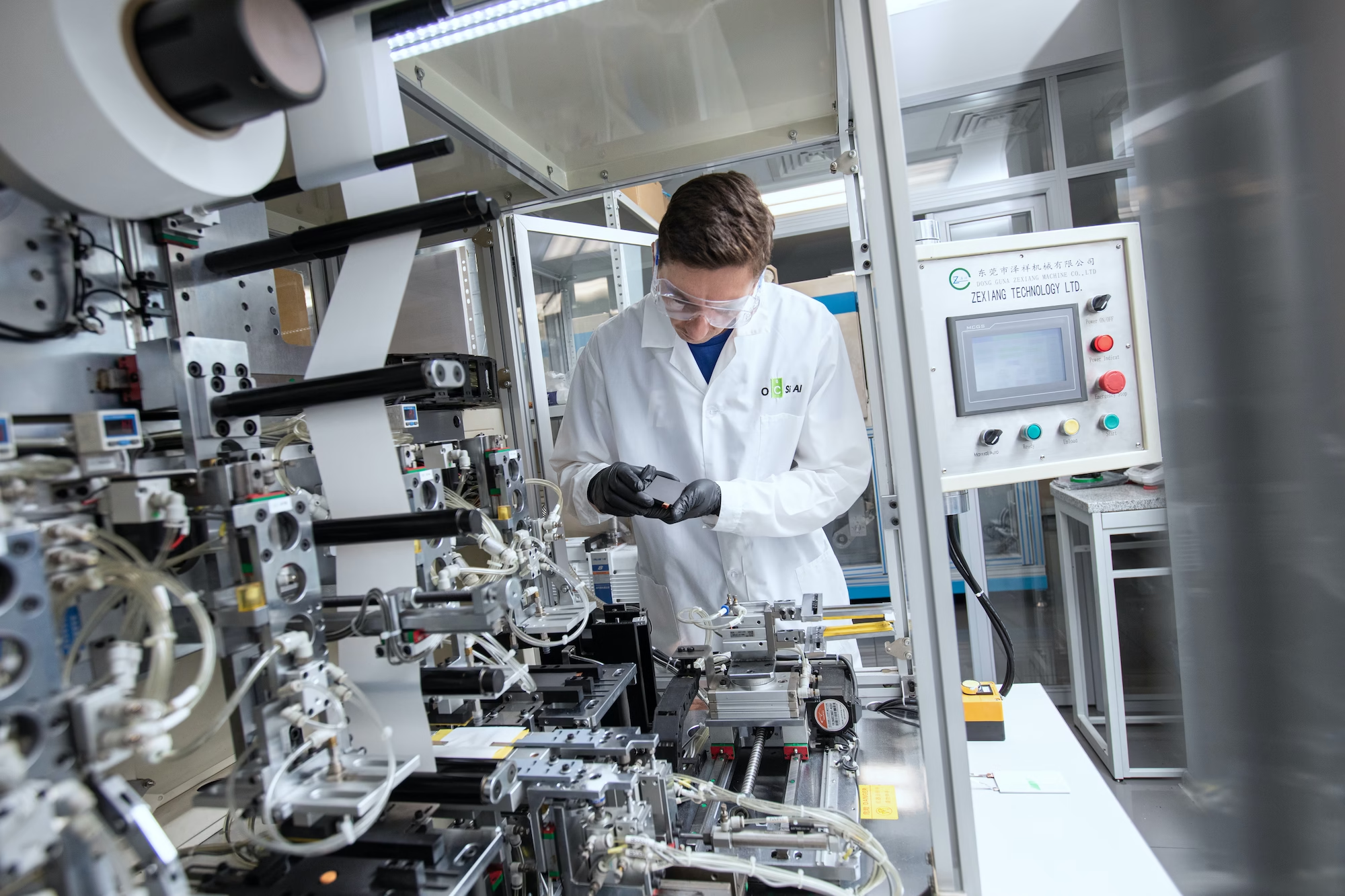
OCSiAl says the PowerCo project uses its nanotube solutions in graphite anodes. The company explains that the additives help battery cells handle higher charging and discharging currents without overheating. That makes the material relevant for industrial battery platforms that need both fast charging and long service life.
The carbon nanotubes will come from OCSiAl ’s production facility in Serbia. OCSiAl says the site already met PowerCo’s quality and reliability audits, along with checks from other major European and Asian battery makers.
Why the material matters
Single wall carbon nanotubes do more than add conductivity. OCSiAl says they form a robust electrical network inside the electrode, which helps particles stay connected during charging and discharging. That matters because electrode degradation can limit performance, reduce safety margins, and shorten battery life.
The company also claims its SWCNTs outperform other carbon-based additives such as carbon black and multiwall carbon nanotubes. It describes the nanotubes as unusually long and flexible, which helps them reinforce the electrode structure while supporting electron flow.
Technical benefits in cells
OCSiAl links SWCNTs to several battery performance gains. These include better energy density, stronger fast charging performance, and longer cycle life. In practical terms, that means a battery can charge faster while remaining more stable under stress.
The company says the effect is especially important in graphite anodes. It also says SWCNT dispersions support energy-dense, silicon-rich, or fast-charging graphite anodes by slowing anode degradation.
Next-gen battery chemistries
OCSiAl is not positioning SWCNTs only for today’s lithium-ion batteries. The company says the material is also gaining traction in dry battery electrodes, semi-solid batteries, and single-crystal NCM cathodes. It also points to energy storage systems using thick LFP cathodes.
That broader chemistry list is important because it shows where the technology may scale next. As batteries move toward higher energy density and faster charging, conductive additives become more critical, not less.
European production strategy
The supply deal also reflects a regional manufacturing strategy. OCSiAl says the nanotubes for PowerCo will be supplied from Serbia, which supports local sourcing of critical battery materials in Europe. The company presents that as part of a wider effort to strengthen European supply resilience.
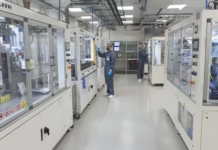
OCSiAl’s Serbian dispersion site adds context here. The company says the facility can produce up to 3,000 metric tons of SWCNT water-based dispersion annually, with output per line described as 15 times higher than the previous generation. It also says the site was built as an industrial blueprint for future expansion.
Europe expansion plans
OCSiAl has tied this battery business to a larger European growth plan. In November 2025, it announced a flagship graphene nanotube facility in Luxembourg, describing it as a $300 million deep-tech investment. The company says that project is meant to place Europe at the forefront of advanced materials innovation.
That makes the PowerCo announcement more than a single supply agreement. It shows OCSiAl building a battery materials network in Europe, with production, dispersion, and long-term expansion all aligned around EV demand.
Key technical points
- SWCNTs improve electrical conductivity in graphite anodes.
- Help dissipate heat during high-current operation.
- Support faster charging without immediate overheating risk.
- Create a stronger conductive network inside electrodes.
- Help slow degradation in silicon-rich and fast-charging anodes.
- They are also relevant to DBE, semi-solid, and solid-state batteries.
Sources: OCSiAl