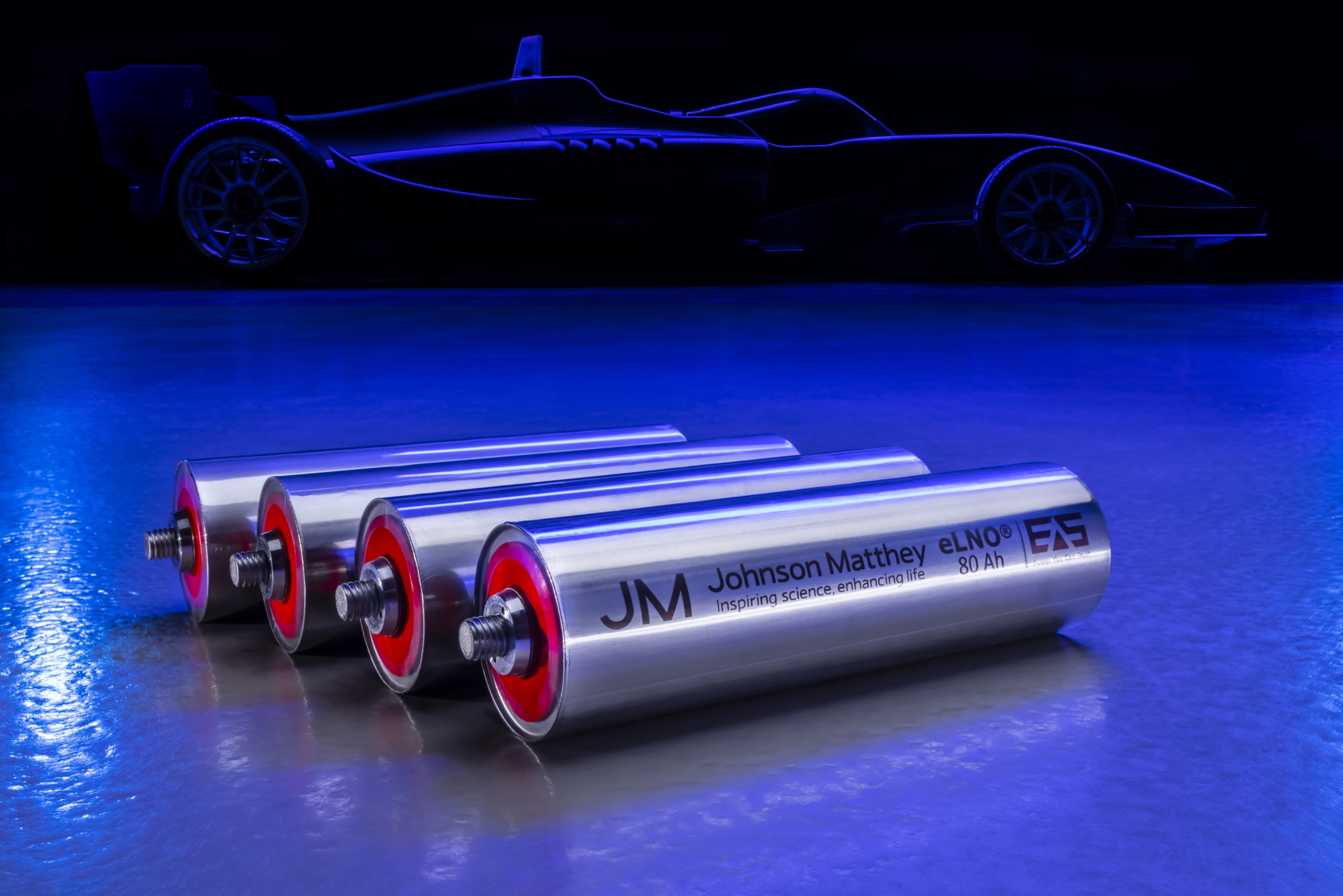

KiBa-Pro is a three-year collaborative project centered on LFP battery cell production. It combines digitalization, automation, and artificial intelligence to improve manufacturing quality and cell service life. EAS Batteries leads the consortium and runs the project from July 2026 to June 2029.
The project’s core idea is straightforward. If production data becomes richer and more connected, manufacturers can improve cells faster and with less waste. That is why KiBa-Pro starts with a full digital capture of the existing production line.
EAS digitization plans
EAS Batteries will equip its production line with extra sensors and modern interfaces. These systems will collect production, material, and quality data in a central infrastructure. The goal is to create a continuous and traceable digital record for the entire process chain.
That approach matters because battery cell production generates many data points, but they often stay fragmented. Research on digital twins in battery manufacturing shows that connected data can improve productivity, speed up ramp-ups, and support sustainability goals.
Data layer’s importance
The project treats manufacturing itself as a source of intelligence. Once the line is digitally mapped, process steps can be linked to cell performance more reliably. That creates a foundation for simulation, prediction, and better process control.
In practice, this means the team can compare input parameters with later cell behavior. The article mentions coating thickness, porosity, material throughput, and temperature profiles as key variables.
The virtual cell concept
KiBa-Pro will use the captured data to build a virtual LFP cell. AI models will analyze large datasets and search for correlations between process settings and final cell characteristics. The team then wants to predict service life, capacity, and performance before running physical trials.
This is a strong example of a digital twin mindset in battery production. Fraunhofer publications describe digital twins as virtual representations that make data, models, and simulations usable for a physical object or process. In battery manufacturing, that can improve traceability, optimization, and quality control.
What the virtual model enables
The project aims to test optimization ideas virtually before changing production. That should reduce development time, lower scrap rates, and help engineers spot errors earlier. It also supports the move toward a Digital Product Passport, which needs robust data and traceability.
This is not only a technical upgrade. It is also a manufacturing strategy. Better prediction means fewer failed runs, faster learning loops, and more controlled scale-up.
Project phases and milestones
The project will move in stages rather than all at once. In the first year, the partners will digitize processes, set up data platforms, and produce initial reference cell batches. That phase creates the baseline for later modelling work.
Later, the consortium will develop the virtual battery cell and AI-based performance models. By the end of the project, the methods should be validated in industrial conditions and integrated into production.
Timeline and deliverables
- Year 1: digital capture, data platform setup, reference batches.
- Middle phase: virtual cell development and AI model training.
- Final phase: industrial validation and production integration.
Who is involved
EAS Batteries coordinates the project and leads manufacturing digitalization. RWTH Aachen handles cell characterization and AI model development. KIT and Batalyse focus on research data management, automated measurement analysis, and the Digital Product Passport at cell level.
Omron participates as an associated partner and brings automation and data acquisition expertise. That mix of partners covers the battery value chain from process data to model development and factory implementation.
Industrial and strategic goals
KiBa-Pro has clear targets. The partners want at least a 10 percent increase in cell service life and at least a 15 percent improvement in production yield. They also want the methods to transfer to other industrial use cases later on.
Those goals are ambitious, but they fit the broader European battery context. Companies and research institutes across Europe are using digital twins, inline inspection, and advanced data systems to make battery production more efficient and more competitive.
Why this matters for Europe
Europe wants more battery independence and stronger local manufacturing capability. Projects like KiBa-Pro help by reducing reliance on trial-and-error production and by building know-how inside European institutions and factories. That supports both industrial resilience and long-term competitiveness.
KiBa-Pro is as part of the German research framework for scaling research and digitalization. In that sense, the project is both a technology program and an industrial policy tool.
Broader battery context
LFP chemistry is gaining attention because it balances cost, safety, and durability well. European companies are increasingly looking at LFP not just as a material choice, but as a manufacturing challenge that needs better process control.
That is where KiBa-Pro becomes relevant. By improving traceability and modelling, it could help European producers close the gap between lab insight and factory execution. Fraunhofer and RWTH work on digital twins shows the same direction: better data integration can improve quality, energy efficiency, and production control.
Sources: EAS Batteries