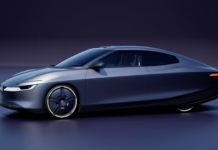
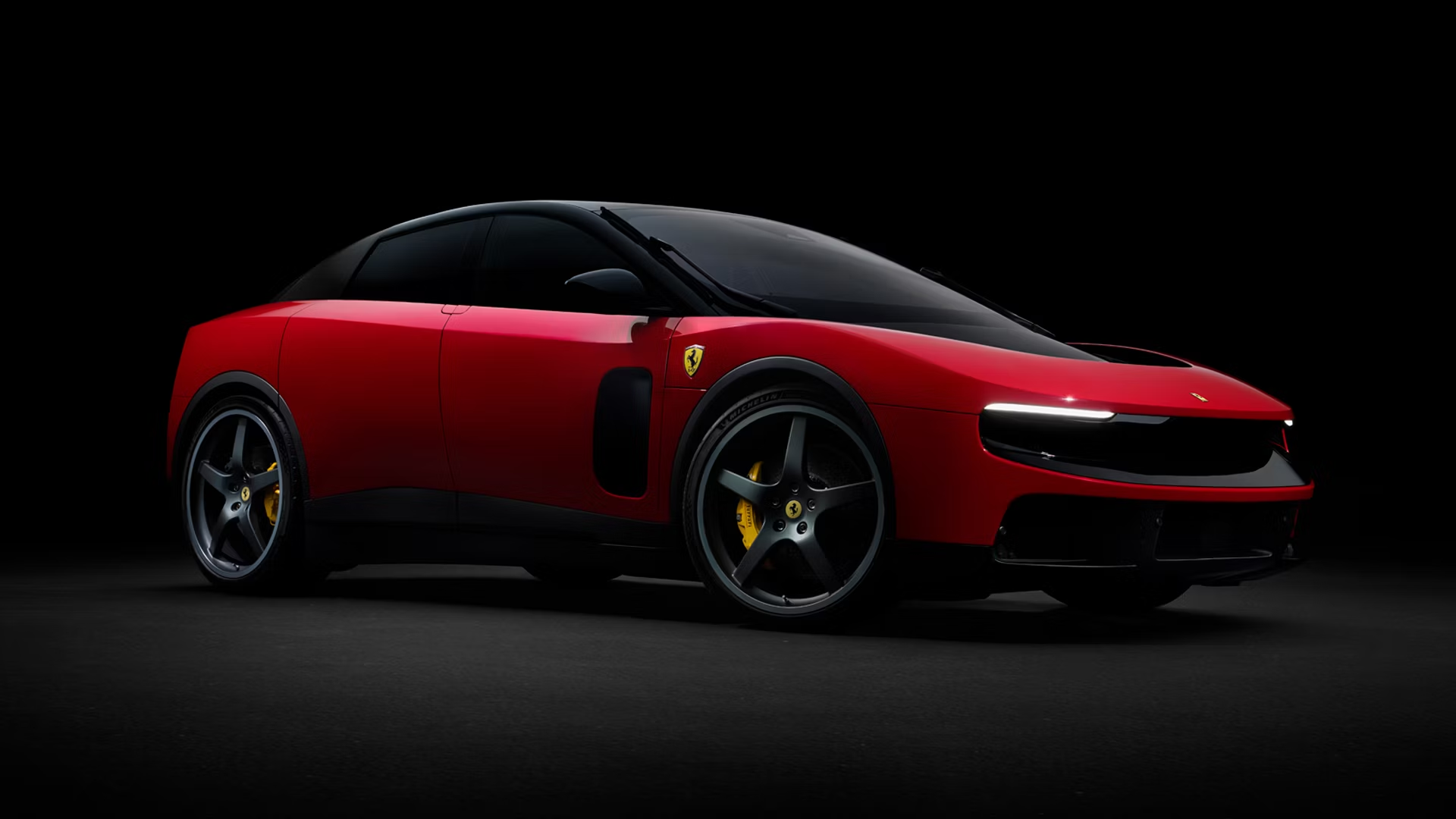

The premium automotive manufacturer Ferrari has officially revealed its first production electric vehicle. Named the Ferrari Luce, this innovative five-seat liftback represents a total transformation for the legendary Italian brand. The vehicle structure abandons traditional combustion design elements in favor of a sleek, continuous silhouette. This exterior form was created in collaboration with the design collective LoveFrom. Famous industrial specialists Sir Jony Ive and Marc Newson led the creative process. The team achieved a highly aerodynamically efficient shape. This architecture delivers the lowest drag coefficient in the history of the legendary manufacturer.
The vehicle features four electric motors that were designed completely in-house. These advanced permanent-magnet units are arranged in a specific configuration. This layout is derived directly from the engineering principles of Formula One racing. The front axle incorporates two compact power units. These front assemblies produce a combined output of 210 kW. They achieve an impressive energy efficiency rating of 93 percent. The rear axle utilizes a separate sub-frame structure. This frame isolates noise and harsh vibration effectively. The twin rear motors generate 310 kW of peak power each. Together, the synchronized powertrain produces a massive total of 1050 metric horsepower.
Cutting Edge Powertrain Technology Drives Electric Performance
In-House Motor Engineering Delivers Maximum Flux Control
The independent electric units utilize a unique Halbach array configuration. This particular internal architecture optimizes the layout of the permanent magnets. The design focuses the magnetic flux directly toward the stator. This breakthrough maximizes overall torque density while saving valuable component weight. The high-speed front motors can rotate up to 30,000 RPM. Meanwhile, the robust rear motors reach a maximum speed of 25.500 RPM. This incredible rotational velocity ensures instantaneous acceleration across all speed ranges.
| FERRARI LUCE ENERGETIC MATRIX |
| Component Peak Power Max Speed Core Tech |
| Front E-Axle 210 kW 30,000 RPM Disconnect Sys |
| Rear E-Axle 620 kW 25.500 RPM Hollow Casting |
| Battery Pack 122 kWh 880 Volts NMC Pouch Cells |
The smart system includes a specialized front axle disconnect mechanism. During steady highway cruising, the front motors decouple entirely. This action minimizes mechanical drag and preserves precious battery range. The engineering focus delivers both high performance and everyday usability. The vehicle accelerates from a standstill to 100 km/h in 2.5 seconds. The hyper grand tourer reaches 200 km/h in just 6.8 seconds. This acceleration matches the fastest internal combustion supercars in production today. The maximum top speed is electronically limited above 310 km/h.
Advanced Structural Battery Pack Maximizes Low Chassis Balance
The high-voltage electrical system utilizes a bespoke 880-volt architecture. The structural battery pack delivers an overall capacity of 122 kWh. This layout was developed and manufactured at the Maranello facility. The physical battery casing acts as a core structural element. This heavy component is bolted directly to the main aluminum chassis. This mounting method lowers the vehicle center of gravity considerably. Specifically, the center of mass drops by approximately 80 millimeters. This change enhances structural stiffness and improves cornering stability.
The complex energy storage system relies on specialized pouch cells. These advanced components feature a premium nickel-manganese-cobalt chemical composition. The innovative Korean technology supplier SK On provides these cells. The high-nickel cathode formulation delivers a pack energy density of 195 Wh/kg. The modules are distributed strategically throughout the floor pan. Approximately 85 percent of the cells sit between the axles. The remaining 15 percent rest beneath the rear seats. This smart packaging choice optimizes the total front-to-rear weight distribution.
Revolutionized Dynamic Architecture Enhances Grand Touring Comfort
Active Ride Control Eliminates Heavy Mechanical Stabilizer Bars
The grand tourer utilizes the third generation of active suspension technology. This advanced setup adapts instantly to changing road conditions. The system features sophisticated adaptive dampers with a high-pitch ball screw. This configuration increases the vertical impact absorption capability by 20 percent. The active suspension controls body roll so effectively that traditional mechanical anti-roll bars are redundant. The vehicle frame utilizes 75 percent recycled aluminum alloys. This material choice cuts weight while matching strict rigidity standards.
The vehicle management software controls four-wheel steering dynamically. This feature coordinates with full torque vectoring across both axles. The braking system features massive ventilated rotors for consistent stopping power. The front brake discs measure 15.4 inches across. The rear brake assemblies use large 14.6-inch rotors. The vehicle rides on the largest staggered wheels ever fitted to a production model. The front wheels measure 23 inches in diameter. The rear axles feature massive 24-inch alloy wheels.
- Aerodynamic Integration: Smooth continuous surfaces incorporate active air shutters.
- Ride Height Automation: The chassis lowers by 10 mm automatically during cruising.
- Aero Wheel Options: Turbine-style rims reduce overall aerodynamic drag by 5 percent.
- Receding Tail Lights: The rear illumination blocks dim completely when deactivated.
Tactile Pilot Interface Combines Physical and Digital Inputs
The driver cabin introduces a minimalist design philosophy. The layout balances mechanical interaction with clear digital interfaces. The main steering assembly groups the essential driver functions together. It combines the physical steering wheel with customized torque paddles. The driver uses a dedicated energy Manettino dial. This switch controls the immediate power flow and battery regeneration. The multi-layered instrument binnacle displays critical data clearly through three distinct glass lenses.
The center console acts as a standalone structural module. This section integrates a custom glass gear selector mechanism. It also houses the physical key dock and storage compartments. The overhead control panel features a mechanical pull handle. This distinct control activates the extreme Launch Mode system. Launch Mode triggers an optimized traction sequence with a five-second stopwatch. The car audio system utilizes patented electro-mechanical vibration sensors. These sensors capture internal axle frequencies to generate authentic driving soundscapes.
Product Portfolio and Ecosystem Sustainability
The manufacturer is expanding its production ecosystem for electrification. A brand-new facility named the E-Building handles vehicle assembly. This specialized plant operates with a strong focus on manufacturing sustainability. The high-voltage hardware receives long-term corporate support through a new program. Named the Forever Program, this initiative guarantees lifetime servicing assistance. The battery modules can be removed easily for separate repair. This modular architecture prevents costly damage to the main vehicle frame.
A dedicated smartphone application provides complete remote vehicle connectivity. Owners can adjust climate settings and monitor charging status remotely. The high-power charging system accepts up to 350 kW of direct current. This allows the battery to absorb half a megawatt of peak energy. The vehicle can regain 70 kWh of electricity in 20 minutes. This swift charging profile minimizes waiting times during long journeys. The total driving range exceeds 530 kilometers under European testing protocols.
Sources: Ferrari