
Study reveals shifting reliability patterns at higher mileage
A comprehensive analysis of 47.4 million UK MOT tests challenges long-held beliefs about used-car purchasing. Electric vehicles demonstrate superior durability compared to petrol equivalents as mileage accumulates beyond 60,000 miles. The British Vehicle Rental and Leasing Association commissioned this research from independent transport organisation New AutoMotive.
Traditional used-car wisdom suggested vehicles passing 60,000 miles faced rapidly increasing mechanical risks. This assumption no longer holds true for battery-electric vehicles entering the second-hand market. The data shows failure rates for electric cars plateau while petrol vehicle failure rates continue climbing with mileage.
Key findings from MOT test analysis
The research examined official DVSA MOT records to track vehicle roadworthiness across different mileage brackets. Several critical patterns emerged when comparing electric and petrol vehicles of identical age and mileage.
Between 20,000 and 40,000 miles, 12.0% of electric vehicles failed MOT tests compared with 11.7% of petrol cars
- At 90,000-120,000 miles, electric cars are around 25% less likely to fail than petrol equivalents
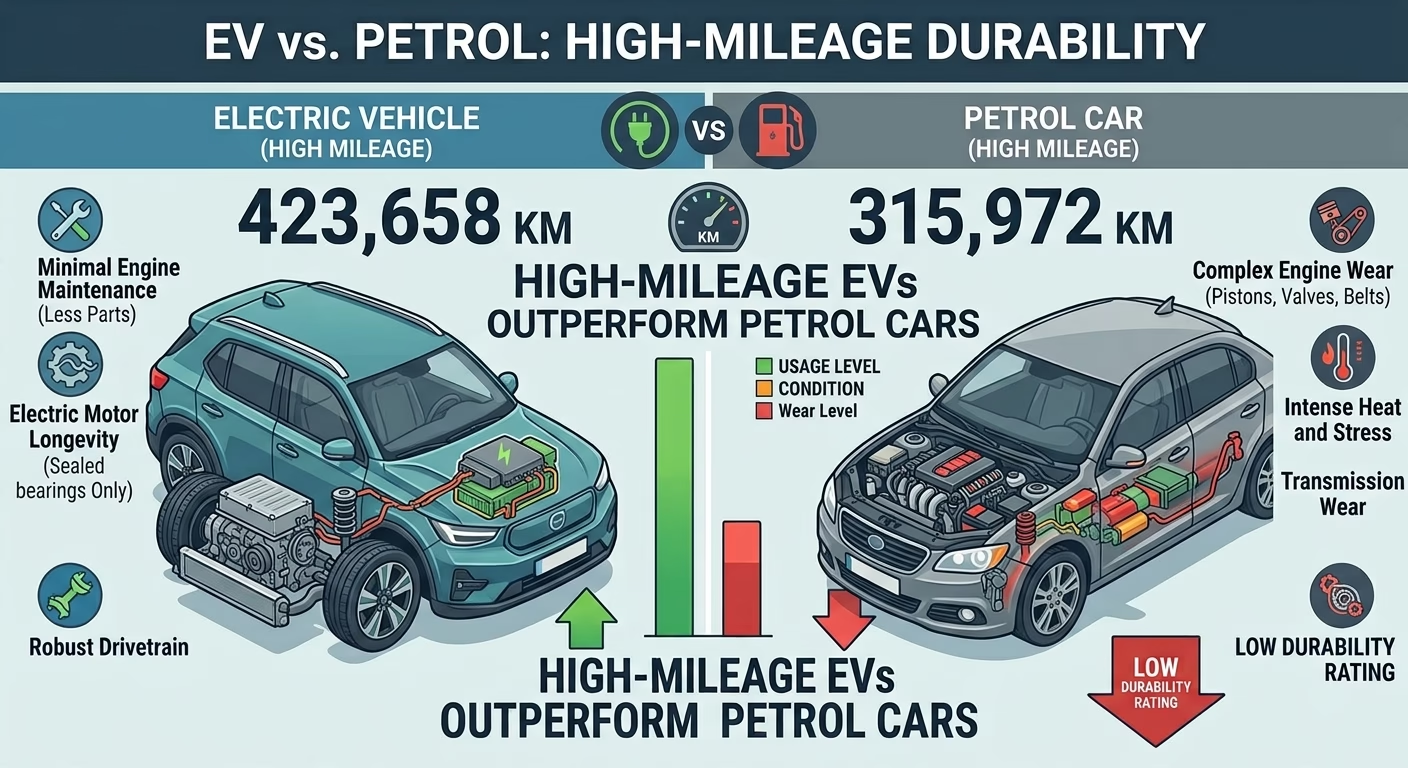
- Beyond 120,000 miles, 16.0% of EVs fail compared with 23.5% of petrol cars
- EV failure rates level off at approximately 16% from around 60,000 miles onward
- Electric vehicles recorded higher median annual mileage than petrol cars at every age between four and 16 years
Among cars aged three to eight years with 90,000 to 120,000 miles, 16.5% of EVs failed their MOT versus 22.1% of petrol cars. This represents a 5.6 percentage-point absolute difference in failure rates. The gap widens further above 120,000 miles, where electric vehicles maintain their 16% failure rate while petrol cars reach 23.5%.
Mechanical simplicity drives long-term reliability
Electric drivetrains contain far fewer moving parts than conventional combustion engines. This fundamental difference becomes increasingly valuable as vehicles accumulate miles over their operational lifetime. Battery-electric vehicles eliminate combustion engines, exhaust systems, and conventional gearboxes entirely.
Toby Poston, BVRLA Chief Executive, explained the implications for used-car buyers. He noted that mileage has always been a primary consideration when purchasing second-hand vehicles. Passing 60,000 or 70,000 miles traditionally impacted vehicle perception significantly. This research suggests buyers must think differently regarding electric vehicles.
Many EVs now entering the used market previously served in company and leasing fleets. These vehicles have already covered substantial mileage during their first life. The data demonstrates that mileage alone should not deter consumers from considering these vehicles. A well-maintained, higher-mileage electric car can serve as an extremely durable used vehicle.
Older electric vehicles remain on roads longer
Researchers examined whether older electric cars disappeared from British roads earlier than petrol vehicles. They tracked whether vehicles returned for subsequent MOT tests within 30-month periods. At age 15, 94.6% of electric cars returned for testing compared with 88.1% of petrol cars.
This equates to an implied road-exit rate of 5.4% for electric cars versus 11.9% for petrol vehicles. Road exit includes vehicles being scrapped, exported, or declared SORN (Statutory Off Road Notification). The study does not claim all vehicles disappearing from the MOT dataset have been scrapped.
The longevity does not appear explained by old EVs becoming low-mileage second cars. Electric vehicles recorded higher median annual mileage than petrol cars at every age examined between four and 16 years. At age 12, electric cars covered approximately 4,920 miles annually compared with 4,410 miles for petrol cars.
Ben Nelmes, Chief Executive of New AutoMotive, emphasised the importance of separating age from mileage in analysis. Looking at headline MOT numbers alone gives a misleading picture, he noted. Britain’s electric cars are much younger than its petrol and diesel fleet overall. Comparing cars by age alone misses the fact that EVs have typically covered considerably more miles.
Areas where electric vehicles face challenges
The study identified specific areas where electric cars performed worse than petrol equivalents. Tyre defects emerged as a particular concern across the dataset. EVs recorded approximately 1.8 times as many tyre defects as petrol cars. The problem proved particularly pronounced among some earlier EVs adapted from combustion-engine platforms.
Researchers found no equivalent weight penalty for suspension components despite heavier electric vehicle construction. Between 60,000 and 90,000 miles, electric cars recorded 4.7 suspension defects per 100 tests compared with 6.1 for petrol cars. This finding contradicts assumptions about heavier vehicles suffering greater suspension wear.
Regenerative braking produces a more complicated picture in the analysis. High-mileage EVs experienced substantially fewer brake defects overall. However, older, low-mileage electric cars showed increased friction-brake defects. Researchers attribute this to corrosion associated with physical brakes being used less frequently.
Hybrid cars also performed strongly throughout the analysis. In several categories, hybrids recorded lower MOT failure rates than either petrol cars or battery-electric vehicles. The researchers stress the study does not establish one powertrain as universally more reliable than another. The research specifically tested concerns about whether battery-electric vehicles become less roadworthy as they age.
Battery health considerations for used EV buyers
The research does not measure the health or remaining capacity of an electric car’s battery. MOT tests examine statutory roadworthiness including brakes, tyres, suspension, steering, and lights. They do not measure battery state of health, electrochemical degradation, or charging performance.
Battery-health information should be considered alongside mechanical roadworthiness when assessing individual used EVs. Poston emphasised this is not an argument for buying a used EV without doing homework. Buyers should examine history, condition, tyres, and battery health carefully. This scrutiny matches what buyers would apply to engine, gearbox, and service history of petrol or diesel cars.
Recent independent battery health studies provide additional context for potential buyers. Analysis of 500,000 EV battery tests shows most electric car batteries retain substantial capacity after tens of thousands of miles. EVs retain between 87% and 94% of initial battery capacity after 150,000 kilometers on average. The median state of health ranged from 91% to 97% after 50,000 kilometers.
An EV reaching 100,000 miles does not automatically mean its battery nears end of useful life. Based on median results, roughly 10% reduction in usable capacity after that mileage is reasonable expectation for many models. Individual results can vary substantially between different vehicles and manufacturers.
Implications for the used electric vehicle market
The used market represents where the transition to electric becomes accessible to millions more motorists. Giving buyers confidence in high-mileage electric cars will be critical for creating healthy second-hand EV markets. Affordable used electric vehicles enable broader adoption beyond early adopters and fleet operators.
The findings challenge traditional used-car assumptions about high mileage inevitably accompanying rapidly increasing mechanical risk. This data provides powerful evidence for anyone considering a used EV purchase. High mileage is not a proxy for poor condition in the way buyers traditionally assumed. The mechanical simplicity of electric drivetrains becomes increasingly valuable as cars accumulate miles.
What buyers can now challenge is the idea that electric cars with 80,000 or 100,000 miles should automatically be regarded as worn out. The evidence simply does not support that assumption anymore. This shift in understanding could significantly impact used EV valuations and buyer confidence.
Sources: BVRLA