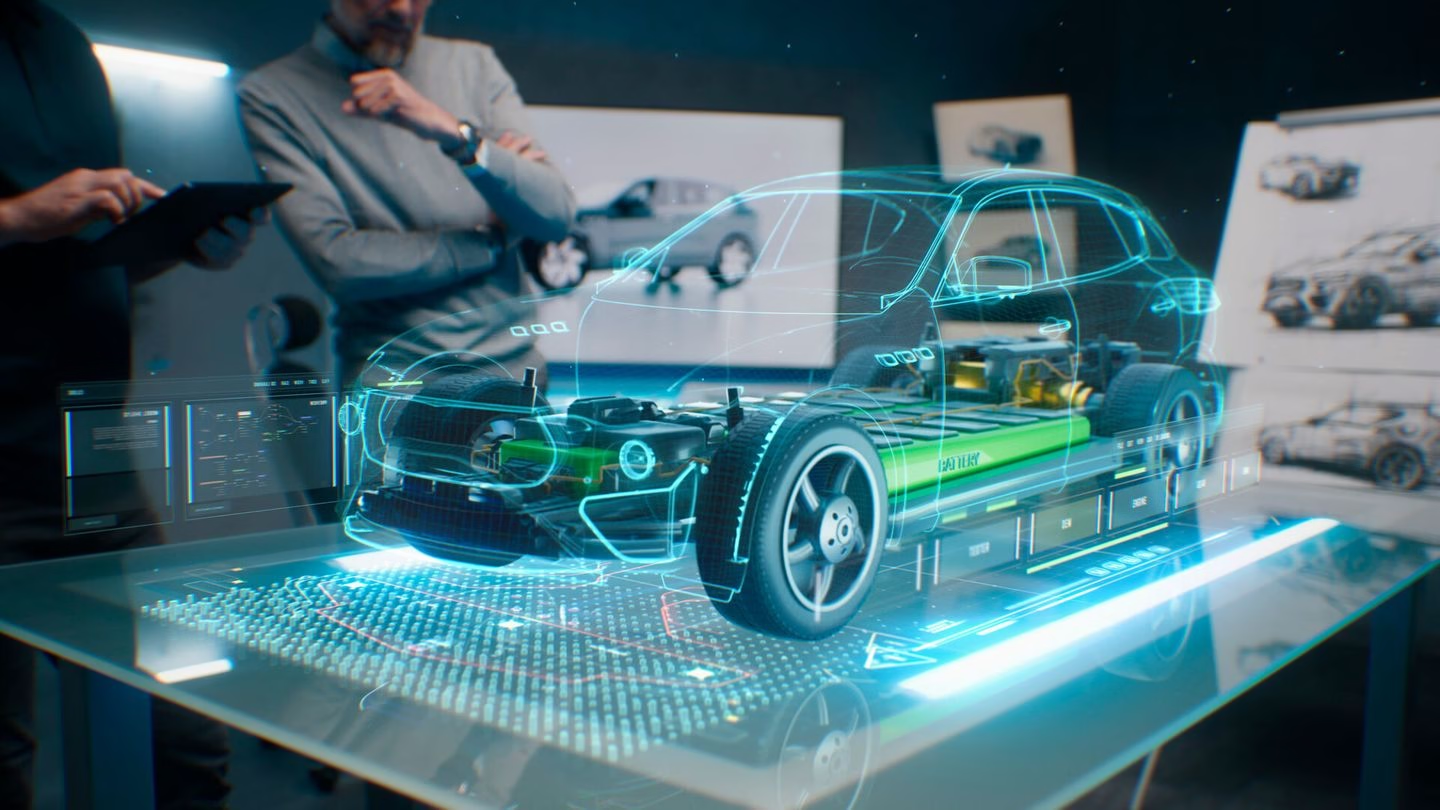

Efficient, safe, and sustainable energy solutions define Schaeffler’s new portfolio. The company presents integrated systems for managing electrical and thermal energy in electric vehicles. High-voltage powernet components and advanced thermal management technologies enable optimal performance under all operating conditions.
Core Technologies Powering Integrated Energy Management
Oil-cooled battery cells represent a breakthrough in battery thermal regulation technology. These cells use direct oil cooling to maintain optimal temperature ranges during charging and discharging cycles. The battery cooling module integrates seamlessly with vehicle thermal systems for maximum efficiency.
X-in-1 electronics integration consolidates multiple high-voltage functions into a single compact unit. This modular approach reduces wiring complexity while improving overall system reliability. The HV powernet architecture supports both 400V and 800V vehicle platforms with scalable design options.
High-Voltage Powernet Components and Charging Solutions
Schaeffler’s high-voltage box 3.0 contains the onboard charger and DC/DC converter in one package. This integration enables efficient power transfer from high-voltage to low-voltage systems. The system supports fast charging protocols while maintaining safety standards.
Electric compressors for thermal management provide precise temperature control for batteries and electronics. These compressors use PFAS-free refrigerants to meet environmental regulations. The R774 CO₂ thermal management system maximizes vehicle efficiency while reducing emissions.
Battery Thermal Management Innovations
Direct oil cooling reaches battery cells through specialized channels within the cell housing. This approach maintains temperature differences below 2 degrees Celsius across the entire battery pack. Consistent temperatures extend battery lifespan and enable faster charging without degradation.
The battery cooling module uses plate-based heat exchangers with optimized flow paths. Thermal conductivity improvements allow heat removal rates up to 50 percent higher than conventional systems. This capability supports high-performance EVs demanding rapid thermal recovery after aggressive driving.
Battery cell enclosures employ thin-walled aluminum construction for maximum heat transfer. Advanced manufacturing techniques ensure precise wall thickness while maintaining structural integrity. Laser welding and special contacting processes create reliable thermal pathways.
X-in-1 Integration Architecture Details
Overmolded power modules in the HV inverter brick provide high efficiency and compact design. The brick includes DC-link capacitors and EMC filters for clean power delivery. Gate drive functions supply intelligent control with voltage and temperature monitoring.
Modular scalability allows adaptation from 400 Amps to 600 Amps current ratings. Single inverter configurations support 400V and 800V vehicle platforms equally well. Standardized signal interfaces connect to microcontrollers for precise drive control.
Low thermal resistance and minimal stray inductance enable efficiency above 97 percent. Small size and high power density reduce vehicle weight while improving performance. Platform-based electronic functions provide flexibility across different vehicle programs.
Vehicle Control Ecosystem for Software-Defined Vehicles
Master control units manage software-defined vehicle architectures with high-performance computing. These units integrate powertrain, thermal management, and energy distribution functions. The ecosystem enables comprehensive vehicle control through E/E and software architectures.
Universal generator solutions for range extender vehicles offer highly integrated compact design. Range extenders provide additional mobility while maintaining electric driving characteristics. The generator integrates seamlessly with existing powertrain architectures.
Thermal Management System Features
Thermal management systems control all coolant circuits and refrigerant heat pump operations. Integrated coolant systems use natural refrigerants like CO₂ and propane for sustainability. The system maintains optimal temperatures for cabin, battery, electronics, and electric machine simultaneously.
PFAS-free refrigerant solutions address environmental regulations without compromising performance. R744 CO₂ CO₂ technology combines system expertise with innovative component design. Vehicle efficiency improves while sustainability goals are achieved through advanced thermal control.
Key Product Specifications and Capabilities
Schaeffler’s integrated energy management portfolio includes these critical components:
- HV Inverter Brick: 400V–800V voltage range, 400–600 Amps current rating, 97%+ efficiency, overmolded power module design
- Oil-Cooled Battery Cells: Direct oil cooling technology, temperature variance below 2°C across battery pack, plate-based heat exchangers
- High Voltage Box 3.0: 400V–800V voltage support, contains onboard charger and DC/DC converter in integrated package
- Electric Compressor: PFAS-free refrigerant compatible, R744 CO₂ support, precise temperature control for batteries and electronics
- Battery Cooling Module: 50% higher heat removal than conventional systems, optimized flow paths, supports fast charging protocols
- Master Control Units: High-performance computing, software-defined vehicle architecture support, integrates powertrain and thermal management
Modularity enables easy integration across different vehicle platforms and manufacturers. Scalability supports various power requirements from compact cars to performance vehicles. Simple interfaces reduce development time and manufacturing complexity.
Digital condition monitoring and predictive maintenance prolong system and machine life cycles. Continuous monitoring enables early detection of potential issues before they cause failures. This approach supports sustainable production by minimizing downtime and waste.
Electrification Range Product Highlights
Schaeffler presents new products from its electrification range at industry events. The E-Mobility division showcases wide-ranging product portfolios for powertrain electrification. Industry professionals evaluate these solutions for next-generation electric vehicle development.
Solid-state battery module development continues at advanced production facilities. Cell stacking precision followed by robust frame welding ensures quality battery production. Sophisticated bonding processes create reliable electrical and thermal connections.
Performance Under All Operating Conditions
Efficient energy management maintains performance during extreme temperatures and high loads. Safe operation is guaranteed through multiple redundancy systems and protective features. Sustainable production outcomes result from optimized energy usage and reduced emissions.
High-voltage systems operate reliably across diverse driving scenarios and environmental conditions. Thermal management prevents overheating during aggressive driving or fast charging events. Battery longevity improves through consistent temperature regulation throughout the vehicle lifetime.
Integrated solutions reduce total system weight while improving overall vehicle efficiency. Compact designs enable better packaging flexibility for automotive engineers. Future electric vehicle architectures benefit from these modular, scalable technologies.
Sources: Schaeffler