
Record-Breaking Aerodynamics and Efficiency
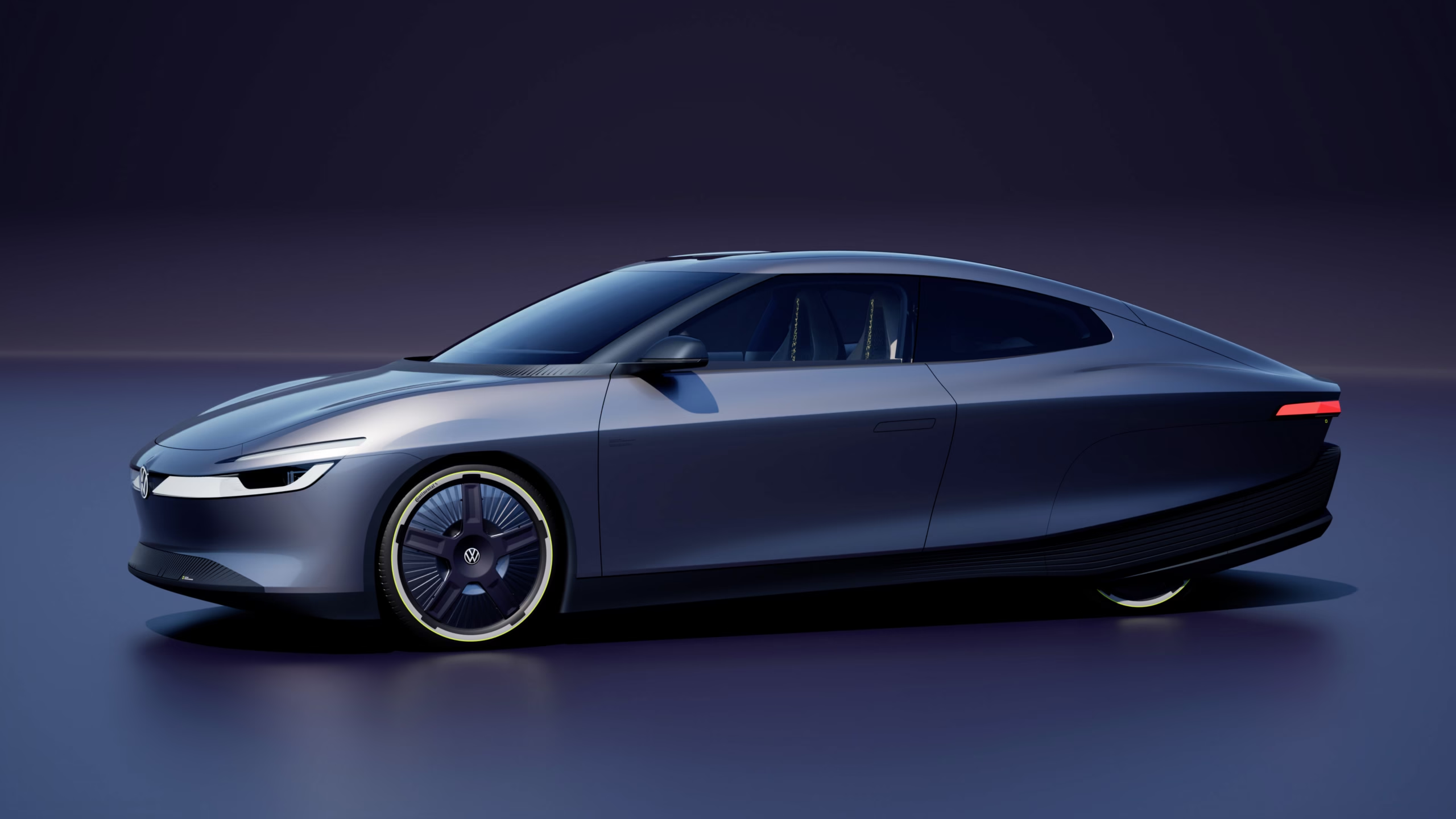
Volkswagen unveiled the Mission Efficiency as a near-production electric concept car. The prototype achieved a drag coefficient of 0.158, a new record for road-approved vehicles. This figure reflects exceptional aerodynamic design and engineering execution. The vehicle also recorded an average consumption of 6.89 kWh per 100 km. This result makes it the most economical electric car in its class.
The test covered 1,278.36 km from Wolfsburg to Vienna. The route passed through Poznań and Olomouc before reaching Austria. Average speed reached 67.72 km/h, with a top speed of 138 km/h. The 54.9 kWh battery required only one charge during the journey. The car arrived in Vienna with 164 km of remaining range.
Production-Ready MEB+ Platform and Drivetrain
Mission Efficiency uses series-production technology from the ID. Polo and ID. Cross. The drivetrain features a 99 kW front-mounted electric motor. This motor belongs to the APP290 family developed for MEB+ front-wheel drive. The platform supports affordable, high-volume electric models across brands.
The battery pack delivers 54.9 kWh of usable energy. It uses nickel-manganese-cobalt chemistry with high energy density. Software adjustments release about 2.9 kWh more than the production ID. Polo allows. This increase supports the record efficiency targets without hardware changes.
Aerodynamic Design Features and Body Structure
The body follows a teardrop shape to minimize air resistance. Frontal area measures only 2.08 square meters for reduced drag. Active cooling air flaps manage airflow based on thermal needs. The underbody is fully clad to smooth airflow underneath the car.
Frameless windows and integrated door handles improve external flow. Rear wheels are clad to reduce turbulence around the tires. The design echoes the Volkswagen XL1’s efficiency-focused DNA. Length reaches 4,775 mm, while height stays at 1,392 mm.
The structure combines ID. Polo components with an aluminum frame. High-strength carbon-fiber and aramid composites reinforce key areas. This mix reduces mass while meeting EU crash and safety standards. The prototype holds EU road approval for public-road testing.
Advanced Braking, Wheels, and Tire Technology
The front axle uses a MacPherson setup and hydraulic brakes. The rear axle features an electromechanical brake for the first time. This system cuts friction losses and removes some brake lines. It also improves recuperation and cornering stability.
Wheels contribute 25 to 30 percent of total aerodynamic resistance. Wheel arches sit closely around tire radii to limit turbulence. Patented rim deflectors prevent air from entering the rims. Flat hubcaps further optimize airflow across the wheel surface.
Continental helped develop a concept tire based on EcoContact 7. Rolling resistance reaches 4.9 kg per tonne, below EU class A limits. Sidewall and tread compounds reduce energy losses during rolling. These gains directly lower consumption and extend driving range.
Thermal Management, Solar Roof, and Lightweight Interior
A heat pump integrated into the climate system reduces heating energy. The system uses natural refrigerant R744 instead of fluorinated gases. This choice supports PFAS-free refrigerant adoption in series production. Cooling flaps open during DC fast charging to aid thermal control.
A photovoltaic system delivers up to 370 W of electrical power. Solar panels cover the glass roof and the boot lid surface. Energy feeds the on-board electrical system and auxiliary consumers. Range can increase by up to 30 km per day in favorable conditions.
Interior panels use lightweight materials to cut overall vehicle mass. A mobile Bluetooth box replaces the conventional speaker system. The “Bring your own device” concept removes the infotainment screen. Drivers use a smartphone or tablet for navigation and media.
Key Specifications and Efficiency Figures
- Drag coefficient: 0.158 Cd (new record for road-approved cars)
- Ideal consumption: 6.48 kWh per 100 km at 68 km/h constant speed
- Real-world consumption: 6.89 kWh per 100 km excluding charging losses
- Real-world consumption: 7.51 kWh per 100 km including charging losses
- Battery capacity: 54.9 kWh net, NMC chemistry
- Electric motor: 99 kW front-drive unit from ID. Polo
- Test route: 1,278.36 km from Wolfsburg to Vienna
- Remaining range at destination: 164 km after one charge stop
- WLTP energy consumption: 8.4 kWh per 100 km
- Solar roof output: up to 370 W for on-board consumers
Strategic Context for Volkswagen’s Electric Lineup
Thomas Schäfer, CEO of the Volkswagen brand, emphasized technology for the masses. The project shows efficiency gains using affordable production parts. Kai Grünitz highlighted the drive system’s light weight and efficiency. Andreas Mindt noted the body’s commitment to functional aerodynamics.
Mission Efficiency previews efficiency potential for MEB+ based models. The ID. Polo and ID. Cross share this front-wheel drive architecture. Entry-level models like ID. EVERY1 will launch on related platforms in 2027. These models target accessible pricing and broad market adoption.
The concept also signals direction for future SSP-based vehicles. SSP aims to support up to 30 million vehicles across the group. Software-defined vehicle architecture will debut in the ID. EVERY1. Efficiency lessons from Mission Efficiency can inform those programs.
Sources: Volkswagen